Let's be real: buying a used car in winter sounds about as appealing as a trip to the dentist. It's cold, it's wet, and you'd rather be indoors watching box sets.
But here's the thing. Winter is actually brilliant for buying cars. Seriously.
While everyone else is hibernating, you've got less competition, desperate sellers, and weather that exposes every problem the car's hiding. It's like house hunting during a storm. Not comfortable, but incredibly revealing.
This isn't your usual "top tips" waffle. This is what actually matters when you're standing in a car park in December wondering if you're about to make a massive mistake.
Why Winter Buying Isn't Mental (It's Actually Smart)
December to February is dead for car sales. Dealers are panicking about targets. Private sellers want rid before Christmas wrecks their bank balance. And because nobody else can be arsed to view cars in the cold, you're not fighting five other people for the same motor.
Translation: proper negotiating power.
But the real advantage? The weather does half your inspection for you.
Winter Shows You What Matters
- Dead batteries reveal themselves immediately
- Damp highlights every leak and seal failure
- Cold starts expose engine problems sellers love to hide
- Heating and demisting issues become impossible to ignore
A car that starts perfectly on a frosty morning? That's a car that's been looked after. A car that coughs, splutters, and throws up warning lights? Walk away.
Summer viewings hide problems. Winter exposes them. Simple as that.
Tip 1: Stop Wasting Time on Dodgy Cars (Check Before You View)
Right. Before you trudge across town to look at some bloke's "immaculate" Fiesta, do your homework.
Start with the free government MOT checker. It'll show you test history, advisories, and recorded mileage. Useful? Absolutely.
Comprehensive? Not even close.
The MOT checker only tells you about MOT tests. It won't tell you if the car's got £10k of outstanding finance. It won't flag if it's been written off. It definitely won't mention if it's stolen or clocked.
For that, you need a proper vehicle history check.
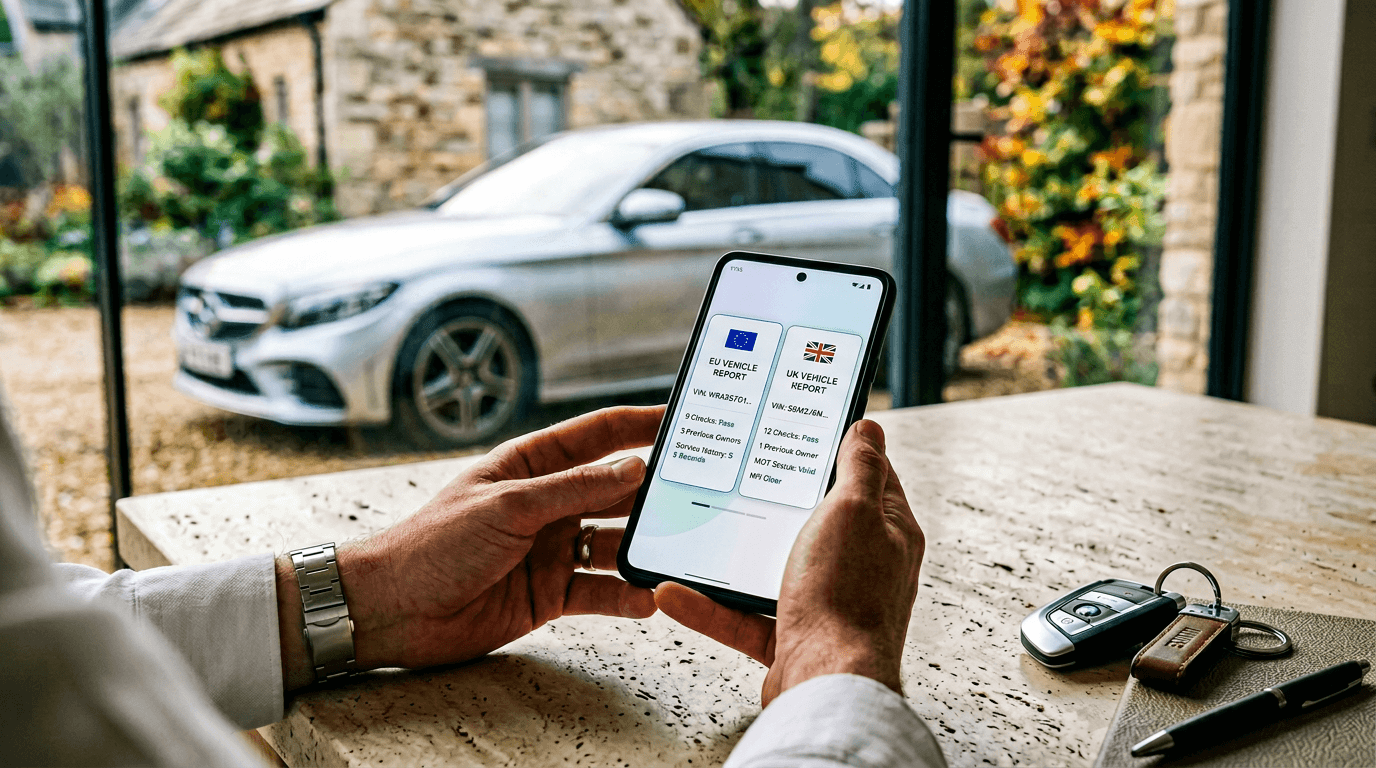
There are loads of companies doing these now. HPI, AutoTrader, Carpeep and others. They pull data from insurance databases, finance records, and theft registers to give you the full picture.
Cost? Usually £10-30 depending on who you use and what's included. Anyone quoting less is probably baiting you with a basic check then hitting you with upsells for the information that actually matters.
Full disclosure: we reckon Carpeep is the best because you get everything in one go with no hidden extras or surprise upgrade prompts, but we might be slightly biased seeing as we built it. Feel free to shop around, but whatever you do, use someone.
Worth it? Absolutely. £hen you consider the alternative is buying a stolen Cat S with outstanding finance and finding out three months later when the finance company turns up to reclaim it.
Don't Be That Person
Every year, thousands of people buy cars without doing a car history check. Every year, thousands of those people end up in financial hell when they discover their "bargain" has problems that make it unsellable or illegal to drive. Don't be that person.
Get a full vehicle history check with Carpeep before you buy.
Also, check the V5C logbook matches the seller. Five previous owners on a three-year-old car? Something scared them off. Find out what before you become owner number six.
Tip 2: The Cold Start Test (Or: How to Catch a Liar)
This one's non-negotiable. You view the car first thing in the morning when it's properly cold.
Not "been sitting for an hour" cold. Properly cold. Overnight cold. Freezing-your-bollocks-off cold.
Why? Because a cold start tells you everything a warm engine hides.
Listen Carefully
Healthy engines fire up immediately, even in January. If it's cranking for ages, hesitating, or running rough, you've got problems. Battery weakness, knackered glow plugs on diesels, or ignition issues on petrol.
White smoke that disappears? Normal condensation. Blue smoke? Oil burning. Black smoke? Fuelling problems. Any of the last two? Walk away.
Watch Those Dashboard Lights
Every warning light should come on briefly then go off. Engine management light staying on? ABS warning glowing? Airbag light doing its best impression of a Christmas tree?
Those are expensive problems the seller's hoping you won't notice.
Here's a fun trick dodgy sellers use: they start the car before you arrive. Warms it up, hides the rough cold start, makes sure you don't see warning lights during the critical startup phase.
Car's already warm when you turn up? Ask why. Don't accept "I was just making sure it works." Insist on turning it off and waiting 30 minutes, or come back tomorrow morning.
Cold Start Red Flags
- Car mysteriously warm on arrival
- Takes forever to start
- Warning lights permanently lit
- Coloured smoke from the exhaust
- Runs like absolute shit until it warms up
Tip 3: Rust Never Sleeps (Neither Should You)
UK roads get absolutely hammered with salt in winter. Cars suffer. Especially older ones, especially ones from coastal areas.
Check everywhere:
- Wheel arches
- Sills and door bottoms
- Boot floor
- Underneath: brake lines, subframes, exhaust mounts
Surface rust? Annoying but manageable. Structural corrosion? Expensive, dangerous, and grounds to walk away immediately.
Stone chips on the bonnet are normal. Paint damage that looks like the car's been through a war? Probably has. Or it's done serious motorway miles without proper care.
Rust bubbles around windows and seals mean water's getting in. That's not just a rust problem, that's an electrical nightmare waiting to happen.
Tip 4: Lights and Wipers (Because You'll Actually Use Them)
Test everything. Indicators, brake lights, fog lamps, all of it.
Condensation in the light clusters? Failed seals. Water will get into electrics eventually. Not immediately catastrophic, but definitely a sign of neglect.
Run the wipers through all their settings. They should clear smoothly without juddering. Washer jets should spray properly.
Worn wiper blades cost about eight quid to replace. If the seller couldn't be arsed to do that, what else have they ignored? Oil changes? Brake pads? The entire concept of maintenance?
Check the windscreen for chips and cracks. Small chip away from your line of sight? Repairable for £50. Massive crack right in your face? That's a £200-500 replacement depending on the car.
Tip 5: Batteries Die in Winter (Check It's Not About To)
Ask when the battery was last replaced. Most batteries last four to six years in the UK.
If the seller jump started it before you arrived, that's not them being helpful. That's them hiding a dying battery.
Replacing a battery costs £60-150. Not expensive. But if they haven't replaced an obviously knackered battery, what else are they ignoring?
It's a maintenance red flag dressed up as a minor inconvenience.
Tip 6: Heating and Demisting (You'll Hate Life Without Them)
Stick the heaters and demister on full blast. Cabin should warm up in a few minutes. Windscreen should clear quickly.
Weak heating means a failing heater matrix or thermostat. Both cost £300-600 to fix. Sweet smell in the cabin? That's coolant leaking into the car. Serious problem.
Test the air con even though it's freezing outside. Run it for a minute or two. Should blow cold air.
Doesn't work or smells like a gym locker? Needs regassing at £40-80. Or it's got a leak in the system, which is hundreds to sort.
Climate Control Checklist
- Cabin warms in 3-5 minutes
- Demister clears the screen properly
- Air con blows cold
- No weird smells (sweet = coolant, musty = mould)
- All fan speeds work
Tip 7: Drive It in the Wet (Because That's When Problems Show Up)
This is winter's superpower. Wet roads expose everything.
Check the Tyres
Legal minimum is 1.6mm. For actual winter safety, you want at least 3mm. Anything less and you're sliding around like Bambi on ice.
Uneven wear means alignment or suspension issues. Which means money.
Test the Brakes
Find somewhere safe and brake firmly from 30mph. Should stop straight without pulling left or right.
Vibration through the pedal? Warped discs. Spongy feel? Air in the lines or worn pads. Either way, factor in brake work.
Listen for Suspension Clunks
Drive over some bumps and speed humps. Listen for knocks, rattles, and clunks.
Worn shocks, failing bushes, tired anti-roll bar links. None of it's *desperately* expensive on its own, but it adds up fast.
Tip 8: Private Seller Red Flags (A.K.A. When to Run)
Most private sellers are sound. But winter brings out people desperately trying to offload problem cars before expensive repairs become unavoidable.
Watch for:
- Won't meet at their home address. Usually means the car's got issues or it's not legally theirs to sell.
- Vague about service history. "I've just had it serviced but lost the receipt" is bollocks 99% of the time.
- Rushes the inspection. Genuine sellers want you to be thorough. Dodgy ones want you gone before you notice problems.
- Car's already warm. We've covered this. It's a trick.
- Price is suspiciously low. £1,500 below market value? There's a reason. Usually outstanding finance or accident damage they're not mentioning.
Before you hand over cash, run a vehicle history check designed for private purchases. The free MOT checker won't tell you about outstanding finance or write-off markers. A proper check will.
That suspiciously cheap car? Might have £8k of finance attached. Find out *before* you buy it, not after.
Trust Your Gut
If something feels off, it probably is. Meet in daylight. Bring someone with you. Tell a mate where you're going. And never, ever hand over money without proper checks. Walking away costs nothing. Buying a dodgy car costs everything.
Tip 9: EVs and Hybrids (They're Different, Deal With It)
Electric and hybrid cars behave differently in winter. Know what's normal and what's a problem.
EV Range Drops
Battery range drops 20-30% in cold weather. This is completely normal and recovers when it warms up.
What's *not* normal? A three-year-old EV showing 60% of its original range. That's battery degradation beyond what it should be.
Hybrid System Should Switch Smoothly
Electric to petrol, petrol to electric. Should be seamless. If the petrol engine's running constantly even on short trips, the hybrid battery's probably dying.
Replacement cost? £1,000-3,000+. Not cheap.
Check for Charging Cables
Buying an EV? Make sure the charging cable's there, undamaged, with the right adaptors.
Replacement cables cost £150-300. Which is mental, but that's what they cost.
Whether you're eyeing a full EV or a plug-in hybrid, it's worth running an electric vehicle background check before committing — battery degradation and hidden faults don't always show up on a winter test drive.
Tip 10: Get Everything in Writing (Or Get Screwed)
Found the right car? Brilliant. Now confirm everything in writing before money changes hands.
Check the V5C matches the seller's ID. Ring the garages in the service book to verify the stamps are real. Yes, people fake them. Yes, it's worth checking.
Make sure you get all keys (usually two), the locking wheel nut, and any service documentation.
Private Sales
Meet at their home address if possible. Use a bank transfer, not cash. Cash is untraceable if things go wrong.
Never pay a deposit without seeing the car in person. And run a final vehicle history check right before payment to make sure nothing's changed since your initial checks.
Dealer Sales
Buying from a dealer? You've got Consumer Rights Act 2015 protection.
The car must be as described, fit for purpose, and satisfactory quality. You've got 30 days to reject a faulty car for a full refund. Six months where faults are presumed to have existed at purchase unless the dealer proves otherwise.
Know your rights. Use them if needed.
Before You Pay
- V5C matches seller's ID
- All keys present
- Locking wheel nut included
- Service book with verified stamps
- Owner's manual and spare wheel/repair kit
- Final vehicle history check done
Stop Overthinking It
Buying a used car in winter isn't complicated. It just requires you to actually pay attention.
Cold weather reveals problems. Fewer buyers means better negotiating power. Motivated sellers mean better deals.
Follow these tips. Don't rush. And for the love of everything, get a proper vehicle history check before you hand over cash.
The free MOT checker is useful, but it's not enough. You need the full picture: finance, write-offs, theft markers, mileage verification, all of it.
Look, we genuinely think Carpeep is the cleanest option because you get everything upfront with no upselling bollocks, but we're obviously biased because it's ours. Use whoever you trust, just make sure you actually use someone.
Do your homework. Check thoroughly. Test drive like you'll own it tomorrow.
Winter's actually one of the smartest times to buy a car in the UK. Just don't be lazy about it.