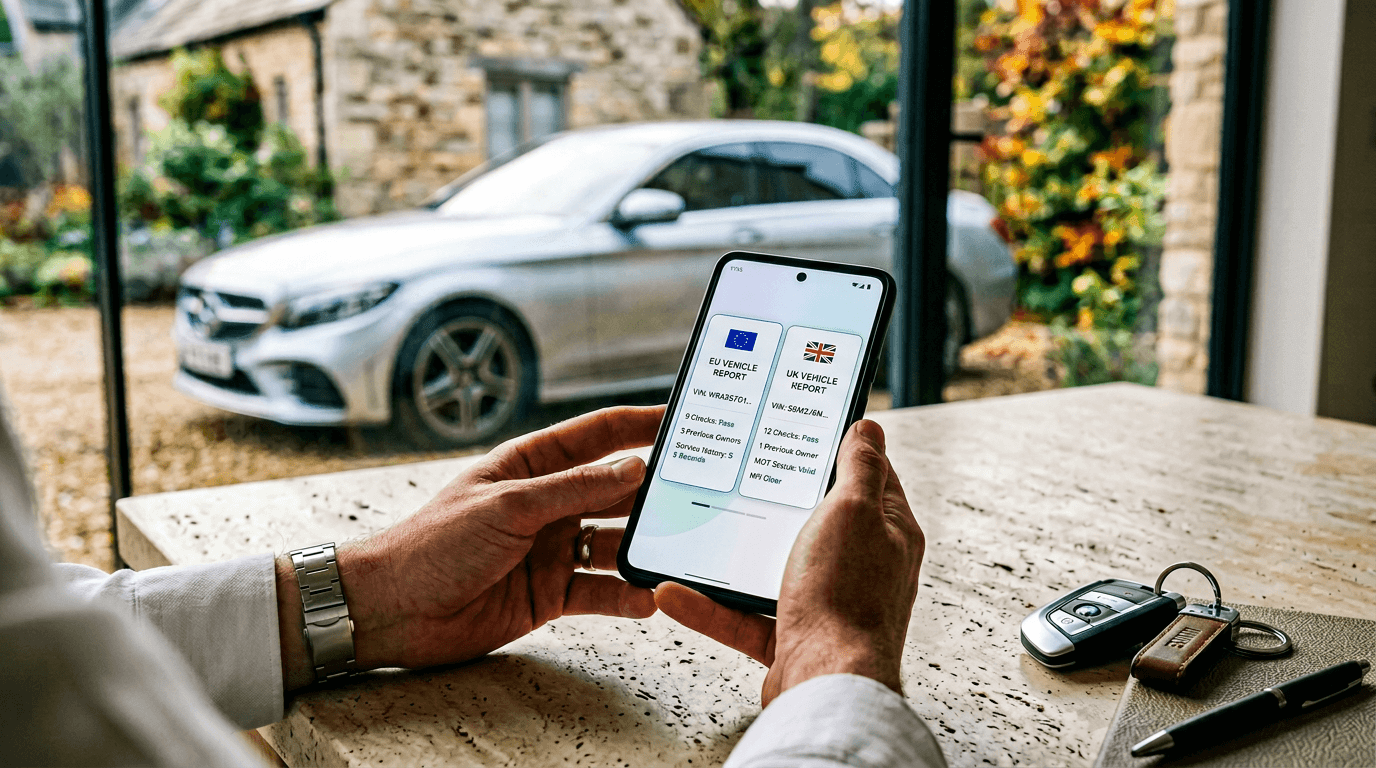
You have found the perfect used car. The price is right, it looks great, and the seller seems genuine. But before you hand over your money, there is one critical question: does this car have outstanding finance?
Outstanding car finance is one of the most common and dangerous hidden problems in used car sales. Understanding what it means could save you from losing thousands of pounds and your new car.
1 in 3
Used cars have outstanding finance
£10,000+
Average amount at risk
Legal right
Finance company can repossess
What Is Outstanding Car Finance?
Outstanding car finance means there is still money owed on the vehicle to a finance company. When someone buys a car using finance, the finance company technically owns the car until the loan is fully paid off.
Common types of car finance include:
Types of car finance
- Hire Purchase (HP): You pay monthly instalments and own the car once the final payment is made.
- Personal Contract Purchase (PCP): Lower monthly payments with a large final "balloon" payment or you return the car.
- Personal Contract Hire (PCH): A long term rental where you never own the car.
- Conditional Sale: Similar to HP but you automatically own the car after the final payment.
- Bank loans secured against the vehicle: The car is used as collateral for a personal loan.
The critical legal point
Until the finance is fully settled, the finance company has a legal claim on the vehicle. If you buy a car with outstanding finance, the finance company can repossess it from you, even if you paid the seller in full and had no idea about the debt. UK law protects the finance company more than innocent buyers.
Why Does Outstanding Finance Matter to You?
If you buy a car that still has outstanding finance, you are not just buying someone else's debt. You are buying a car that legally belongs to someone else: the finance company.
What can happen
- The finance company can repossess the car at any time.
- You lose both the car and the money you paid for it.
- The seller may disappear, leaving you with no recourse.
- You have no legal claim against the finance company.
- You could face legal costs trying to recover your money.
- You are suddenly left without transport.
What you should do
- Run a comprehensive finance check before buying.
- Never hand over money if finance is outstanding.
- Ask the seller to settle the finance first.
- Get written proof of settlement from the finance company.
- Run a fresh check after settlement to confirm.
- Walk away if the seller cannot or will not settle.
How Common Is This Problem?
Outstanding finance is surprisingly common in the used car market. Many sellers do not realise they still owe money, misunderstand their finance agreement, or deliberately hide the debt to make a quick sale.
A significant proportion of used cars advertised for sale still have outstanding finance.
Private sales are especially risky because you do not have dealer protections.
Some sellers assume that after a few years of payments, they own the car outright, but this is not always true.
PCP agreements can be particularly confusing, with large final payments that many owners forget about.
Even some dealers have unknowingly sold cars with hidden finance from part exchanges.
Real World Scenarios
The honest mistake
Sarah bought a car on PCP three years ago. She made all her monthly payments and assumed she owned the car. She decided to sell it privately for £12,000. The buyer ran a finance check and discovered Sarah still owed £8,000 in a final balloon payment. Sarah had completely forgotten about this final payment. The sale could not proceed until she settled the finance first.
The deliberate deception
Mark bought a car for £15,000 from a private seller. The seller seemed genuine and provided all the paperwork. Six months later, Mark received a letter from a finance company saying they were repossessing the car because £11,000 was still outstanding. The seller had disconnected their phone and moved address. Mark lost both the car and his money.
"I thought I had done everything right. I checked the V5C, saw the service history, even took it for a test drive. I never thought to check for finance. That mistake cost me £18,000."
Even dealers can be caught
Some dealers have accepted part exchanges with hidden finance and unknowingly sold them on. When the finance company traces the car, it creates a complex and expensive situation for everyone involved, including innocent buyers.
Why You Should Check Even When Buying from Traders
Many buyers assume that buying from a dealer or trader means the car has been thoroughly checked. Unfortunately, this is not always the case.
Traders often source their inventory from vehicle auctions, part exchanges, or other traders. While reputable dealers do run checks, many smaller traders or those operating on tight margins skip comprehensive vehicle history checks to save costs. They may only check basic MOT status rather than running full checks.
Even when a trader does run a check, they might not check for everything. Some only verify MOT history, missing finance, write offs, or theft status. Others might run checks at the time of purchase but not recheck before selling, meaning finance could have been added in the meantime.
Traders frequently buy cars from auctions and may not run their own comprehensive checks.
Part exchange vehicles often come with incomplete history.
Some traders prioritise profit margins over comprehensive checks.
Even honest traders can miss hidden finance if they do not run full checks.
You have no guarantee that a trader has checked for finance, even if they claim they have.
The bottom line: never assume a trader has checked everything. Always run your own comprehensive vehicle history check, regardless of whether you are buying from a private seller or a trader. Your protection is your responsibility.
How to Check for Outstanding Finance
You cannot tell by looking at a car whether it has outstanding finance. The seller might not know, might be hiding it, or might be in the process of settling but not yet cleared. The only way to know for certain is to run a proper finance check.
What a comprehensive check reveals
- All outstanding hire purchase agreements.
- Active PCP agreements with remaining balances.
- Lease agreements that are still active.
- Conditional sale agreements.
- Bank loans secured against the vehicle.
- The finance provider's name and contact details.
- Whether the finance is active or has been settled.
Choosing a Vehicle History Check Service
There are many services available that offer vehicle history checks in the UK. Popular options include Carpeep, HPI Check, AA Vehicle Checks, RAC Vehicle Checks, and AutoTrader Vehicle Check, among others.
The important thing is that you get a check done. All reputable services will pick up outstanding finance because most of the data comes from the same place: UK finance providers and official sources like the DVLA, MOT database, and insurance industry records. It does not really matter which service you choose, as long as you choose one and run the check before you buy.
We are obviously biased, but if you are looking for a recommendation, we built Carpeep because we found other services too complicated and cluttered. Our reports use plain language with clear summaries and automatic flagging of issues, so you do not have to decode technical jargon or hunt through confusing charts. We include all checks at one transparent price with no hidden fees, confusing tiers, or paid extras. Your report loads instantly after payment with no accounts or subscriptions required, and we email you a secure shareable link so you can access it anytime. We have designed every part of the experience to make vehicle history checks straightforward and stress free. Buying a used car is complicated enough as it is, so the check should make things easier, not harder.
What to Do if Finance Is Found
If your check reveals outstanding finance, do not panic. Here is what you should do:
Is it Unit Stocking finance?
First, check what type of finance is showing. If the finance is listed as "Unit Stocking" and you are buying from a dealer, this is inventory financing the dealer uses to stock their forecourt. Unit Stocking finance is cleared once you pay for the car, but it can take time to propagate through the system. Let the dealer know you have seen the Unit Stocking finance on your check, get confirmation from them that it will be cleared as part of the sale, and then around a week after your purchase, contact the finance company directly yourself. Finance companies have departments that can check whether an asset like your vehicle still belongs to them. The finance should drop off within a week or two at most, not months. If it has not cleared after a couple of weeks, follow up with both the dealer and the finance company. Remember, if you are buying from a dealer, you have more consumer rights and protections than with a private sale, which gives you additional recourse if there are any issues.
Outstanding finance from a private seller
If the finance is not Unit Stocking and you are buying from a private seller, you need to take a different approach. Here is what to do:
Step by step action plan
- Do not proceed with the purchase until the finance is fully settled.
- Ask the seller directly about the finance and see what they say.
- Request settlement: ask the seller to contact the finance company and get a settlement figure.
- Get written proof of settlement from the finance company, not just from the seller.
- Verify the settlement: contact the finance company directly for instant confirmation, or run a fresh vehicle history check one to two weeks after settlement as it takes time to propagate.
- Only then proceed with the purchase once you have verified the finance is gone.
- Walk away if the seller refuses, cannot settle, or seems evasive.
Legitimate settlement process
Some sellers are honest about outstanding finance and settle it as part of the sale. This is perfectly legitimate, but you must verify it properly. Get the settlement figure in writing from the finance company, wait for confirmation that it has been paid, and run a fresh check before you hand over any money. Never pay until the finance is fully cleared.
Warning Signs to Watch For
While you should always run a proper check, there are some warning signs that might indicate hidden finance:
The car is being sold significantly below market value with no clear reason.
The seller insists on cash payment only and refuses bank transfers.
The V5C shows very recent registration in the seller's name.
The seller wants to sell quickly and uses pressure tactics.
The seller is vague or evasive about why they are selling.
The seller will not provide proper ID or proof of address.
The seller refuses to let you run a vehicle history check.
The seller gets defensive when you ask about finance history.
Why You Cannot Rely on the Seller's Word
Even honest sellers can be mistaken about their finance status. They might think they own the car when they do not, or they might have forgotten about a final payment. Dishonest sellers will deliberately lie to make a quick sale.
The truth about seller assurances
A seller saying "the finance is cleared" or "I own it outright" means nothing without proof. You need independent verification from a proper vehicle history check. The finance company's records are the only source of truth, not the seller's word or even paperwork they show you.
What if the seller says they already ran a check?
Some sellers will tell you they have already completed a vehicle history check and offer to show you the results. While this might seem helpful, you should always verify this yourself.
First, check when the report was generated. Vehicle history can change quickly. Finance can be added, write offs can be recorded, and theft status can be updated. A report that is more than 30 days old may not reflect the current status of the vehicle. Always insist on a fresh check or verify that any existing report is recent.
Second, do not just accept a screenshot or printed copy. These can be easily faked or edited. Instead, ask the seller to provide a direct link to the report on the vehicle history check provider's website. Visit the link yourself to confirm it is genuine and current.
Carpeep shareable reports
With
Carpeep, every report includes a unique shareable URL. If a seller claims they have already run a
Carpeep check, they can share the direct link with you. You can visit that link yourself to verify the report is real, see exactly when it was generated, and confirm all the details match what the seller is telling you. This direct verification gives you complete confidence that the report is authentic and up to date.
If the seller cannot provide a verifiable link or the report is outdated, run your own fresh check. The small cost of a new report is worth the peace of mind, especially when thousands of pounds are at stake.
The Small Cost of Protection
A comprehensive vehicle history check costs a fraction of what many buyers lose to finance fraud. For around £15, you get complete protection covering finance, theft, write offs, MOT history and mileage analysis.
Compare that to losing a car worth thousands, dealing with legal stress, and suddenly being without transport. The value of a proper check becomes obvious.
Outstanding finance checklist
- Always run a comprehensive finance check before viewing a car.
- Never hand over money if outstanding finance is found.
- Ask the seller directly about finance history and see their response.
- Verify that V5C keeper details match the person selling.
- Request written proof of settlement from the finance company if finance was recently cleared.
- Run a fresh check after settlement to confirm it has been cleared.
- Do not pay cash without checking first.
- Walk away if the seller refuses a check or cannot settle finance.
- Keep copies of checks and documents for your records.
Final Thoughts
Outstanding car finance is one of the most common hidden problems with used cars and one of the most devastating for buyers. Understanding what it means and how to check for it is essential knowledge for anyone buying a used car.
You cannot see finance by looking at a car. You cannot trust the seller's word. The only way to protect yourself is with a proper vehicle history check that searches finance company records.
Remember
For the price of a simple meal, you can remove the risk of outstanding finance completely. A
Carpeep check covers finance alongside all other major risks in one comprehensive report. Never buy a used car without running a proper check first. Your future self and your wallet will be glad you did.
Outstanding finance does not have to be a problem if you check for it before you buy. Make checking for finance an essential part of your car buying process, just like checking the MOT or taking a test drive.