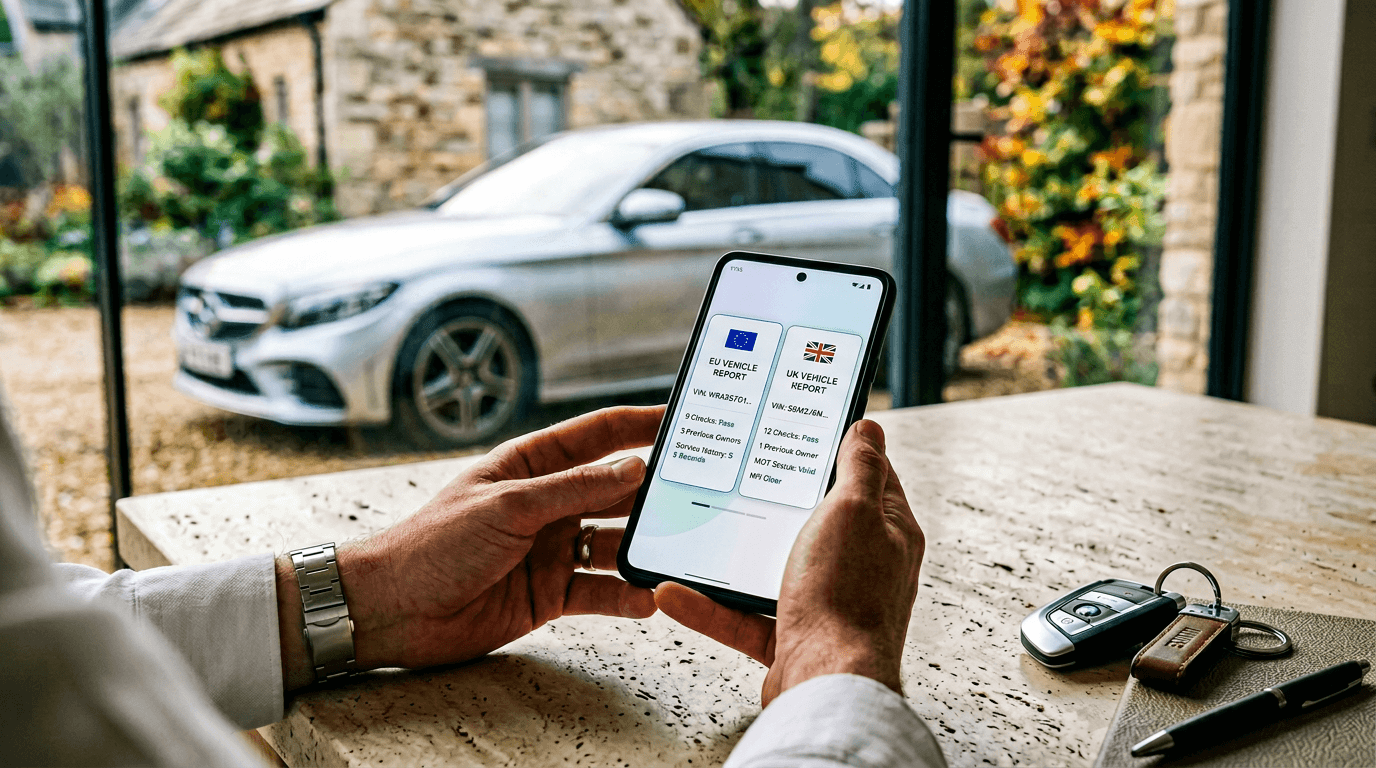
Buying a used car in the UK without checking for outstanding finance is one of the most common — and costly — mistakes buyers make. If a car still has finance attached, the finance company may have the legal right to repossess it, even after you've paid the seller.
This guide explains how to check if a car is on finance, what different finance results mean, including Unit Stocking finance, and what to do before you buy.
Why Checking for Outstanding Finance Is Essential
Many cars in the UK are bought using:
- Hire Purchase (HP)
- Personal Contract Purchase (PCP)
- Conditional Sale agreements
Until the finance is fully settled, the lender is the legal owner of the vehicle, not the person selling it. If you unknowingly buy a car with active finance:
The car can be repossessed
You may lose the car and the money you paid
Recovery is extremely difficult
The legal reality
UK law protects finance companies more than buyers. The finance agreement follows the car, not the person. You can lose both the car and your money with no easy way to claim it back if the seller disappears.
How to Check if a Car Is on Finance
To perform a proper finance check, you need:
- The vehicle registration number, or
- The VIN (Vehicle Identification Number)
A full UK car finance check searches national finance databases and identifies:
- Active finance agreements
- Cleared or settled finance
- Finance provider details
Free checks are not enough
Free checks often do not include finance data or only perform partial searches. A comprehensive check from a reputable service is essential to protect yourself.
What a Car Finance Check Will Show
A complete finance check may show:
- No outstanding finance
- Hire Purchase / PCP finance
- Conditional Sale finance
- Unit Stocking finance (dealer-related)
Understanding the difference matters.
What Is Unit Stocking Finance? (Important for Dealer Cars)
Unit Stocking finance is a type of finance used by car dealers, not private individuals.
It is essentially a short-term loan taken out by a dealership to fund their vehicle stock. Instead of paying upfront for every car on the forecourt, the dealer uses a finance provider to "stock" vehicles and repays the lender once the car is sold.
How Unit Stocking works
When a dealer needs to stock their forecourt with vehicles, they don't pay cash for every car upfront. Instead, they use a finance provider to fund their inventory. The finance company pays for the vehicles, and the dealer repays the lender once each car is sold to a customer.
Why Unit Stocking Appears on a Car History Check
Unit Stocking finance can appear on a car history check when:
- The car is currently owned by a dealership
- The dealer has financed that specific vehicle as part of their stock
- The finance has not yet been cleared at the time of the check
This can confuse buyers, because the car is not under consumer finance, but it is still technically financed.
Why this matters
Unit Stocking finance is dealer inventory financing, not consumer finance. However, it still appears on finance checks because the vehicle is technically financed until the dealer sells it and clears the debt.
Is Unit Stocking Finance a Problem for Buyers?
Not usually — if handled correctly.
When buying from a legitimate dealer:
- The dealer is responsible for clearing the Unit Stocking finance
- The finance should be settled automatically as part of the sale
- The buyer should receive the car free of finance
However, problems arise when:
The dealer fails to clear the finance
The vehicle is sold before the finance is properly settled
The buyer purchases without confirmation
Timing matters
Unit Stocking finance can take a week or two to clear from the system after a sale. If you're buying from a dealer and see Unit Stocking finance, get written confirmation that it will be cleared, and consider running a follow-up check after purchase to verify it has been removed.
What You Should Do If Unit Stocking Is Found
If a car history check shows Unit Stocking finance:
- Confirm the seller is a registered dealer
- Ask for written confirmation that the finance will be cleared on sale
- Ideally, run a post-sale finance check to confirm it is cleared
Red flag: Private seller with Unit Stocking
If a private seller claims "it's just unit stocking" — walk away. Unit Stocking is dealer-only finance. A private individual cannot have Unit Stocking finance on their vehicle. This is a major warning sign.
When buying from a private individual rather than a dealer, the finance risk is especially high since there is no business to fall back on if things go wrong. Running a private seller vehicle check before you commit helps confirm whether any finance remains on the car.
Common Myths That Cost Buyers Money
Myth: "It's from a dealer, so it's fine"
Only if the finance is properly cleared. Never assume. Always verify with a proper check.
Myth: "Unit Stocking means I'll lose the car"
Not if the dealer clears it correctly — but you must verify. Don't take their word for it.
Myth: "Older cars won't have finance"
Unit Stocking can apply to vehicles of any age if held in stock. Age doesn't guarantee finance-free status.
Finance check essentials
- Always run a comprehensive finance check before buying
- Understand the difference between consumer finance and Unit Stocking
- Get written confirmation from dealers about Unit Stocking clearance
- Never buy from a private seller if Unit Stocking appears on the check
- Run a follow-up check after purchase if Unit Stocking was present
- Never assume — always verify
Final Advice
A car finance check protects you from:
- Repossession
- Legal disputes
- Losing thousands of pounds
Understanding Unit Stocking finance is especially important when buying from dealers, as it commonly appears on car history checks and is often misunderstood.
Clear, simple results
Carpeep makes finance results clear, simple, and written in plain English — so you know exactly what you're buying before you commit. Our reports automatically flag finance issues and explain what each result means, including Unit Stocking finance, so you can make informed decisions with confidence.
Never buy a used car without checking for finance first. The small cost of a comprehensive check is nothing compared to the risk of losing your car and your money.