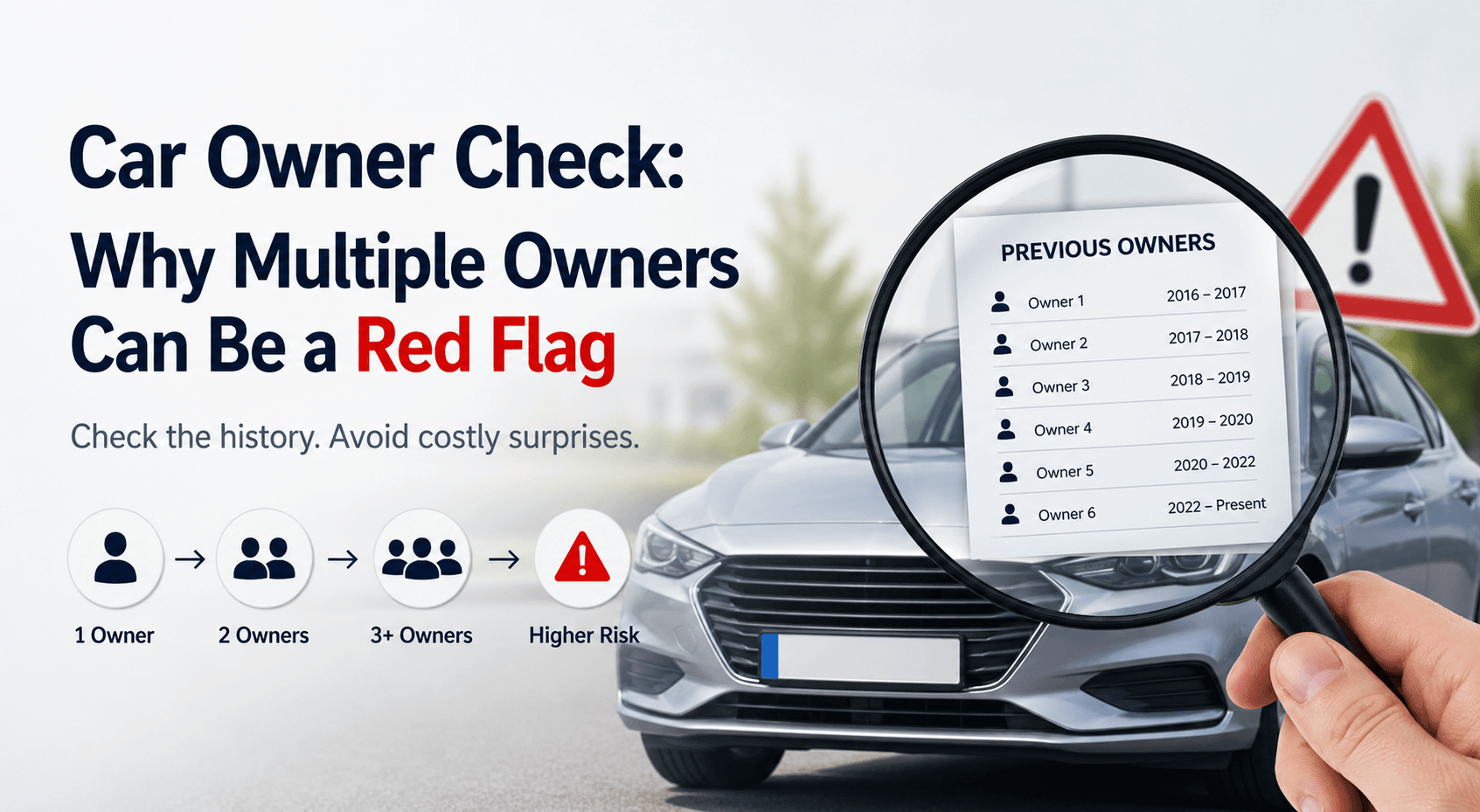
You have found a used car you like. The price feels fair, the photos look clean and the seller answers most of your questions without hesitation. Then you glance at the V5C and see five previous keepers on an eight year old hatchback.
Is that a deal breaker, a quirk, or a warning you should listen to?
Getting this wrong can cost you thousands.
The number of previous owners is one of the most underrated signals on a used car. It will not always tell you the full story, but it usually hints at a story you have not been told yet. Before you transfer any money, run a car owner check so you can see the ownership pattern, mileage trail and any hidden flags in seconds.
This guide explains how to read previous keeper counts the way a careful UK buyer should.
Why Multiple Owners Can Be a Warning Sign
A car with a long list of keepers is not automatically a bad car. However, every change of hands has a reason, and reasons stack up. People rarely sell a faultless, affordable, well loved car after a few months.
Common reasons a problem car gets passed along quickly
- Recurring faults the previous owner could not afford to fix.
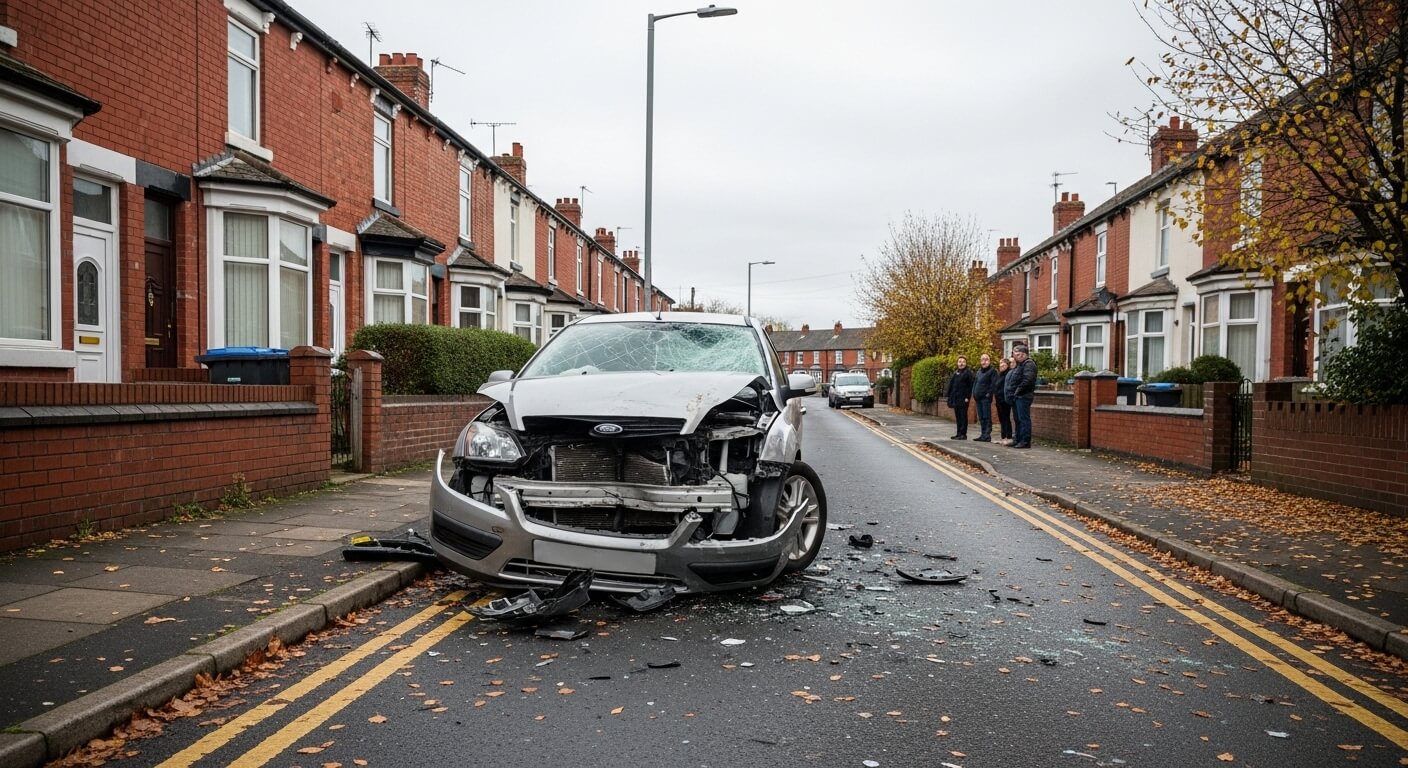
- Hidden accident damage that surfaced after they bought it.
- Higher running costs than the seller expected.
- Mileage tampering that became harder to hide over time.
- Outstanding finance carried over from a previous keeper.
If a vehicle has been moving on faster than the average ownership cycle in the UK, ask yourself what each seller may have been trying to escape. A car owner check pulls those data points together so the pattern is no longer hidden behind tidy paperwork.
High turnover is a tell
A modern car with four or more keepers in under five years almost always has a reason. It might be innocent. It might not. Either way, you deserve to know before you part with your money.
When Multiple Owners Are Not a Problem
Plenty of used cars have several keepers for boring, harmless reasons. Context matters far more than the raw number.
Perfectly normal reasons for multiple owners
- Family cars handed between partners, parents and adult children.
- Company and lease cars that move from a fleet to a dealer to a private buyer.
- Cars sold on after a house move, a new baby or a change of job.
- Older cars that pass between enthusiasts who simply enjoy buying and selling.
- Cheap runarounds under £2,000 that change hands often by their nature.
Newer cars with three or four owners often look worse than older cars with the same count. A 2022 supermini with five keepers should raise far more questions than a 2008 estate with five keepers.
If each ownership lasted a reasonable length of time, the mileage progresses logically and the service history is consistent, multiple owners on their own are not enough reason to walk away.
Ownership Patterns to Watch Before Buying
The number of keepers is only useful when you read it alongside the timeline. Two cars can both show four previous owners and tell completely different stories.
Patterns that should slow you down
- A new keeper every six to twelve months on a relatively recent car.
- A change of keeper followed quickly by an MOT advisory you cannot trace.
- A long ownership followed by three rapid flips, often a sign of a trade chain.
- A private to trade to private pattern, where a dealer used the car as a buffer.
- A keeper change that lines up suspiciously with a mileage drop or unexplained jump.
Patterns that are usually fine
- One long ownership of three to six years followed by one or two recent keepers.
- A clean handover between family members at the same address.
- Steady mileage growth across each ownership with no awkward gaps.
- A short ownership early in the car's life, then settled long term keepers.
Always cross reference keepers against MOT history and mileage. A clean pattern across all three is reassuring. A contradiction in any one of them is a reason to dig deeper before you commit.
If you are seeing any of these patterns, stop guessing and run a car owner check before you go any further.
What a Car Owner Check Can Reveal
A proper car owner check goes well beyond the V5C in front of you. Run a car owner check before you even arrange a viewing and you will already know:
- Total number of previous keepers on official DVLA records.
- The date of the most recent keeper change.
- Whether the registered keeper count matches what the seller has told you.
- MOT and mileage trail mapped across each ownership period.
- Outstanding finance, theft markers and write off categories.
- Plate changes and import status that can quietly hide a messier history.
Use the data at the table
Buyers who arrive with a Carpeep report in hand negotiate harder and walk away faster. The seller stops controlling the story the moment you can quote keeper dates, mileages and finance status from an independent source.
Final Advice Before You Buy
The number of previous owners is rarely a deal breaker on its own, but it is one of the cleanest signals you have. Pair it with mileage history, MOT advisories and a finance check and you will spot most problem cars without ever leaving the kitchen table.
Before you hand over any money
- Match the seller and the address to the V5C in person.
- Compare every recorded mileage against the seller's claim.
- Always check previous owners before buying and ask why each one moved on.
- Walk away from any seller who pushes back on simple, reasonable checks.
Run the check, then make the decision
Spend a few pounds on a Carpeep
car owner check before you spend thousands on the car. Most buyers find at least one fact the seller did not mention. That fact is usually worth far more than the price of the report.