
09 October 2026
Best HPI Check Websites UK: 2026 Comparison
Compare UK HPI car history check websites in 2026, including Carpeep, HPI, AA, RAC, CarVertical and Total Car Check.
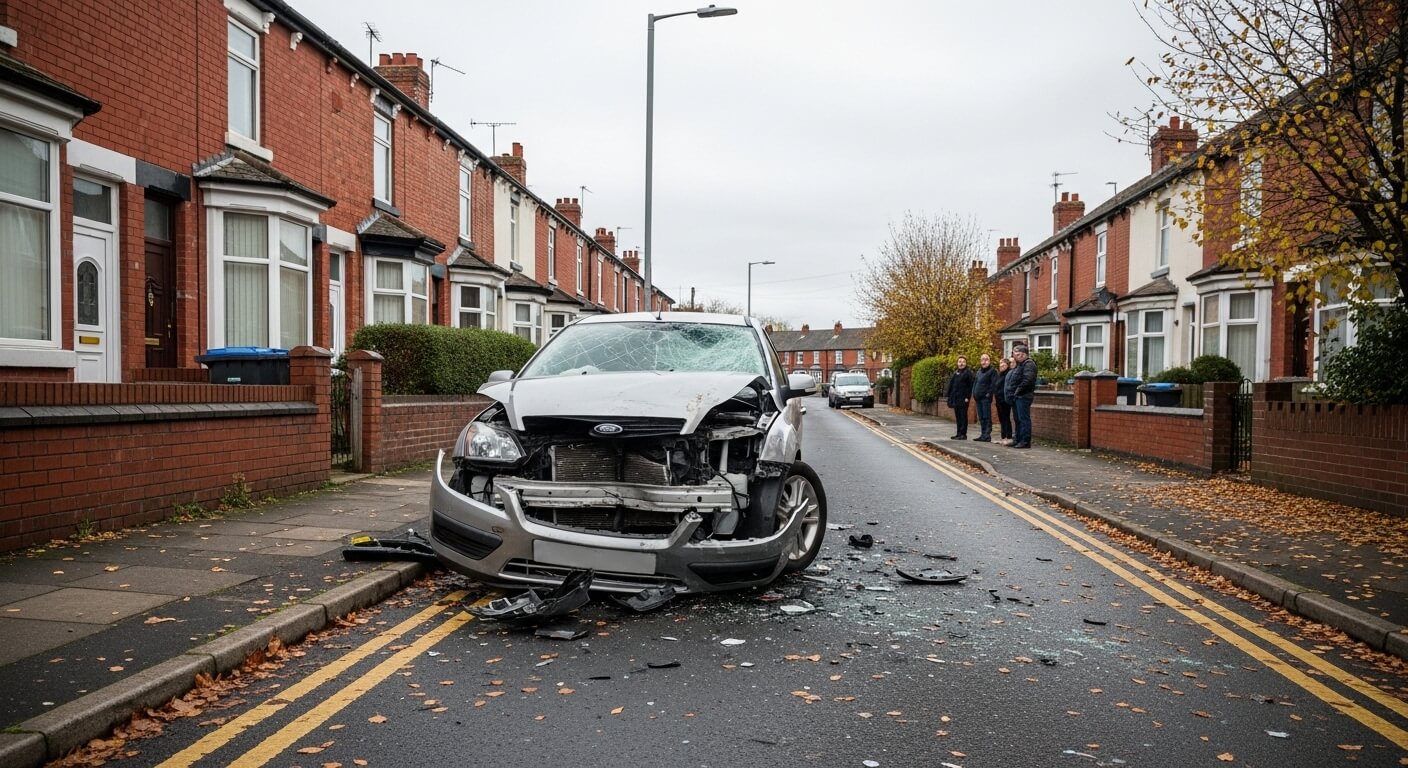
Cat S and Cat N cars often appear cheaper than similar models on used car marketplaces. Sometimes the discount is a genuine bargain. Sometimes it hides a much bigger problem.
A write-off marker affects more than just the asking price. It can change the quality of the repair, the safety of the car in a future collision, the insurance premium you pay, whether a lender will finance it, and what you can sell it for later. The category itself is only part of the story. The bigger question is what actually happened to the car before you arrived to look at it — and whether anyone can prove what was done about it.
When a car is damaged — through an accident, flood, fire, theft recovery or vandalism — the insurance company decides whether to repair it or write it off. The decision is usually financial: if the repair cost exceeds a certain percentage of the car's market value, it is cheaper to pay the owner out and dispose of the vehicle than to fix it.
The threshold varies between insurers, but it typically sits somewhere around 50–60% of the car's value. This means relatively minor damage on a low-value car can trigger a write-off, while serious damage on an expensive car might still get repaired. A £500 repair on a car worth £800 is a write-off. The same repair on a car worth £20,000 is a Tuesday afternoon.
That single fact explains most of what confuses buyers about write-offs. A category is a statement about economics, not about severity. It tells you the insurer decided the sums did not work — and only roughly what kind of damage was involved.
Once a car is declared a write-off, it is given a category marker, and that marker is recorded against the vehicle permanently. It never goes away, even if the car is repaired perfectly.
The current system has been in place since October 2017, when the old Cat C and Cat D categories were replaced by Cat S and Cat N. These two are the ones you will actually encounter when buying used.
Cat S — the "S" stands for structural — means the car suffered damage to its structure but can be professionally repaired to a safe, roadworthy standard.
Structural damage means the parts of the car that give it its strength and hold everything in alignment were affected:
Before a Cat S car can legally return to the road it must be re-registered with the DVLA. Until 2017, these were called Category C write-offs.
Cat N — "N" for non-structural — means the car was written off due to damage that did not affect the structure. It is the mildest write-off category and the one most commonly found on used cars for sale.
Non-structural damage covers a very wide range:
Cat N cars do not need to be re-registered with the DVLA before returning to the road. They were previously known as Category D write-offs.
A great many Cat N cars were written off because the economics did not stack up for the insurer, not because the damage was serious. A cheap car with a smashed taillight, a dented boot lid and a scratched bumper can easily cost more to repair through an insurance-approved body shop than the car is worth. The same job done privately might cost a fraction of that.
Most explanations stop at "structural versus non-structural". That is correct, but it is not much use when you are standing on a driveway deciding whether to hand over £6,000. Here is what actually changes between the two.
| Category S | Category N | |
|---|---|---|
| What was damaged | The car's structure — chassis, subframe, crumple zones, pillars | Everything else — panels, glass, lights, electrics, interior, mechanical parts |
| Replaces | Old Category C | Old Category D |
| DVLA re-registration | Required before it returns to the road | Not required |
| Main risk to you | A structural repair done badly, which you cannot see | A repair never actually done, or hidden water and electrical damage |
| Can you assess it yourself? | No — this needs a professional inspection | Partly, with a careful viewing in daylight |
| Typical market discount | Larger | Smaller |
| Insurance | Harder to place; more insurers decline | Usually straightforward; many insurers are relaxed about it |
The most important row is the fourth one. The two categories fail in different directions. With a Cat S car, the danger is that serious work was done poorly. With a Cat N car, the danger is that the work was never done at all — or that the damage was water and wiring rather than a dented door.
On paper, Cat S is worse. It means the structure of the car was compromised, and structure is what keeps you alive in a crash. A Cat S car needs DVLA re-registration, attracts a bigger discount, and is harder to insure. If you are ranking the two categories in the abstract, Cat S sits below Cat N every time.
In the real world, the answer is less tidy. The category tells you what kind of damage the insurer recorded. It tells you nothing whatsoever about the quality of the repair — and the repair is what you are actually buying.
A Cat S car straightened on a jig by a reputable body shop, with photographs, invoices and a proper geometry check, can be a sounder car than a Cat N one that was bought at salvage, given a cheap respray, and put straight back on the market with the same crumpled inner wing it arrived with. Both are legal. Only one of them is honest.
So the useful ranking is not really Cat S versus Cat N. It is this: a car with a documented, professional repair, whatever its category, beats a car with an undocumented one. If a seller cannot tell you what was damaged, who fixed it and what it cost, the category is the least of your problems.
Cat A and Cat B exist for cars too badly damaged to repair, and you should never see them for sale as usable vehicles. They are worth knowing about mainly so you can recognise a listing that should not exist.
Cat A: scrap only. The entire vehicle must be crushed. No parts may be salvaged — not even the wheels. If you see a Cat A car advertised as repairable, something is seriously wrong.
Cat B: body shell destroyed, parts salvaged. The shell must be crushed, though usable components such as the engine, gearbox or electronics can be sold on for salvage. The car itself cannot return to the road. A registration that was Cat B turning up for sale is a red flag for car cloning or fraudulent re-registration, which is exactly what a write-off check is designed to catch.
There is no official discount table, and anyone who quotes you a precise figure is guessing. Valuation guides treat write-offs inconsistently, and the market decides the rest. What is consistent is the direction, the mechanism, and roughly the scale.
As a rule of thumb, buyers commonly expect somewhere around 20–30% off a clean-history equivalent for Cat N, and 30–40% or more for Cat S. Treat those as the opening position in a negotiation, not a valuation. On a rare or in-demand model the market forgives less; on a common hatchback with a thick folder of repair invoices, it forgives more.
Here is the part buyers consistently underestimate. The marker stays with the car permanently, which means you do not "use up" the discount by buying — you inherit it.
Say you buy a Cat N car for £8,000 when the clean equivalent is £10,500. You have saved £2,500 on paper. Three years later you come to sell. The next buyer wants the same discount you did, applied to whatever the car is worth by then — and applied on top of three years of ordinary depreciation. You do not get your £2,500 back. You simply pass it on.
The saving is therefore only genuinely yours if you keep the car for a long time and drive it into the ground. If you are planning to sell in eighteen months, the discount is a loan, not a gift.
Several costs sit outside the sticker price and are easy to forget until they arrive:
Insurance is where a lot of Cat S and Cat N purchases come unstuck, and it is the one thing you can check before you commit — which makes it inexcusable to leave until after.
Insurers treat a write-off marker as a material fact. If they ask whether the vehicle has been written off, or previously declared a total loss, and the answer is not accurate, a claim can be reduced or refused and the policy can be voided altogether. That is a catastrophic outcome: you could end up with no cover, no payout, and a record of a voided policy that follows you to every future quote.
Attitudes vary enormously between insurers. Many are entirely relaxed about Cat N and will quote as normal. Cat S is harder: some insurers decline it, some load the premium, and some want to know the details of the repair before they will commit.
The fix is simple, and it costs nothing. Get real quotes before you buy, with the category disclosed. Not an estimate, not a comparison-site figure for a clean car — an actual quote for the actual car, with the write-off history declared. If the numbers ruin the deal, you have found that out for free.
This is the part people never think about. If your Cat S or Cat N car is later damaged and declared a total loss, your insurer pays out its market value — and its market value already reflects the write-off marker. You bought at a discount, so you get paid out at a discount.
That is entirely fair, but it changes the maths. The cheap car is also the car that returns less if the worst happens, which is worth holding in mind when you are deciding how much of the "saving" is really a saving.
Yes — sometimes, and with your eyes open. Plenty of Cat S and Cat N cars are perfectly sound buys, and refusing to consider them on principle means paying a premium for a clean history that, in some cases, only means nobody happened to make a claim.
The honest answer depends on the specific car, the quality of the repair, and whether the price genuinely reflects the marker.
That last point deserves emphasis. A dealer is required to disclose a write-off. A private seller may simply not mention it, and "I didn't know" is the standard excuse. If you discovered the marker yourself and the seller looks surprised, you have learned something about the car — and rather more about the seller.
This is where the decision is actually made. A write-off marker is not a verdict; it is an instruction to look harder. Below is what to look at, in the order you will encounter it.
Match the VIN on the V5C against the car itself, in every place the car carries it: the plate visible through the windscreen, the sticker in the door shut, and the stamped chassis number. On a rebuilt car, these are exactly the details that stop lining up. Repair invoices should come from a named business with an address, not a phone number scrawled on a receipt pad.
Look at the car outdoors, in daylight, and preferably when it is dry — rain and dusk hide a multitude of sins, which is one reason evening viewings are so popular with the wrong sort of seller.
This is where a Cat S car is won or lost, and where most buyers simply do not look.
Cat N covers flood and electrical damage, and both of those hide well.
For a Cat S car, treat a professional inspection as part of the purchase price rather than an optional extra. An inspector can assess structural alignment, weld quality and whether the safety systems were properly restored — none of which you can judge from the paintwork, however carefully you look. Set against the cost of the car, it is trivial. Set against the cost of getting it wrong, it is nothing at all.
Write-off status does not appear on the V5C log book. It will not be obvious from a test drive, and it will not show on a free check either — which is precisely the difference between a free and paid car check. Many sellers, deliberately or otherwise, fail to mention it. The only reliable way to know is to check the vehicle's history yourself, before any money moves.
Enter the registration and get the key facts before you commit to the car.
No account needed • Apple Pay accepted
A Carpeep car history check shows write-off status alongside finance flags, stolen markers, mileage anomalies and ownership history — all in one report, for one registration. If the car carries a Cat S or Cat N marker, you will know before you negotiate rather than after you have already paid.
If you are researching an older car, you will still see references to the category system used before October 2017.
The change was made because the old system sorted repairable write-offs by cost rather than by the type of damage. A car with a bent chassis and a car with a scratched bumper could both end up as Cat C if the repair bill crossed the value threshold. The new system at least tells you whether the structure was involved, which is far more useful when you are deciding whether to buy.
One important consequence: a Cat D marker is not the same as a Cat N marker. Because the old categories did not separate structural from non-structural damage, an old Cat D car might have had damage that would be classed as Cat S today. Treat Cat D as Cat D history and ask what was actually damaged.
Unfortunately, write-offs attract fraud. These are the ones to know about.
Category washing. A written-off car is registered abroad — Ireland is a common route — and then re-imported, so the UK write-off marker no longer follows it. The damage history effectively vanishes from UK databases. This is why an imported vehicle with a suspiciously recent registration deserves extra scrutiny.
Undisclosed write-offs. The simplest scam of all: say nothing and hope the buyer does not check. A dealer is legally required to disclose it. A private seller may claim ignorance. Run the check yourself rather than relying on anybody's word.
Cut and shut. Two written-off cars of the same model are cut apart and welded together to make one apparently complete car. It is extremely dangerous, because the structure will not behave as designed in a collision, and it is illegal. A VIN check and a proper physical inspection are what catch it.
Cosmetic cover-ups. A fresh respray on a three-year-old car should make you ask why. Sellers sometimes cover repaired damage with new paint to make a car look untouched. Check the panel gaps, look for overspray under the bonnet, and feel along the seams for filler.
The categories that matter to most used car buyers are Cat S and Cat N. Both can be repaired, both can legally be driven, and both can be sound buys — provided you get the repair history, have the car properly inspected, and pay a price that genuinely reflects the marker.
The risk was never in buying a written-off car. The risk is in buying one without knowing. Run the reg through a car history check before you go and see it, and you will know exactly what you are dealing with before you even turn the key.
Hidden finance and write-offs won't show up on a test drive.
Instant results • All checks included
Swipe to explore more