Yes, you can buy a car that still has money owing on it, but you should never do it blind. With hire purchase, PCP or conditional sale, the finance company is the legal owner until the agreement is settled, so the seller has no title to pass to you. The deal only works if the finance is cleared as part of it.
Quick answer
Buying is possible and it happens every day on dealer forecourts. Get a written settlement figure from the seller's lender, pay that amount straight to the finance company yourself, wait for written confirmation that the agreement is closed, then pay the seller the balance. Before any of that, run a car finance check on the registration so you know whether an agreement exists and who holds it.
Who actually owns a car on finance
Hire purchase, PCP and conditional sale
All three are secured against the vehicle itself. You hire or conditionally buy the car while you pay, and ownership only transfers at the end, usually on the final payment plus a small option to purchase fee on HP and PCP. Until then the lender owns it. Someone selling mid agreement is the registered keeper named on the V5C, and a V5C logbook check tells you about the document rather than about title.
An unsecured loan is a different situation
If the seller borrowed as a personal loan and bought the car outright, the debt is theirs and nothing is attached to the vehicle. No marker appears on a finance check. From the outside the two situations look identical, which is exactly why the check exists.
Is it illegal to sell a car on finance?
Selling without the lender's consent breaches the agreement, and where a seller hides it deliberately to take your money it can amount to fraud. That is a matter for the seller, the lender and the police. It does not void your purchase and it does not automatically leave you safe. What decides whether you keep the car is a piece of law from 1964.
Good faith and the Hire Purchase Act 1964
Part III of the Hire Purchase Act 1964 protects a private purchaser who buys a vehicle in good faith and without notice of an outstanding hire purchase or conditional sale agreement. Where it applies, the law treats the seller as though they held good title at the point of sale, so the car is yours and the lender has to pursue the person who sold it.
Two details trip people up. A private purchaser means anyone who is not in the business of buying and selling vehicles or providing vehicle finance, so a sole trader buying a van still counts, while a dealer buying stock does not. And "without notice" means you genuinely did not know. A lender that believes you did know, or that you deliberately avoided finding out, will push back hard.
Good faith is something you have to evidence
Keep the advert, the messages, the receipt with the seller's name and address, and the finance check you ran, with its date. A check dated before you paid is far stronger than saying you had no idea. This is general information rather than legal advice, and a solicitor is worth the money if a lender is already chasing you.
Trader or private seller: the practical difference
The legal position on title is broadly the same in both cases. What you can do about it afterwards is not.
| Situation | Buying from a trader | Buying from a private seller |
|---|
| Duty to have the right to sell | The Consumer Rights Act 2015 requires the trader to have the right to supply the car, and gives you 30 days to reject | The seller must own what they sell, but the Consumer Rights Act 2015 does not apply between private individuals |
| Getting your money back | A business with premises, a bank account and a reputation to protect | A person who may have spent the money and moved on, leaving you with a county court claim to enforce |
| If the lender demands the car | The trader is normally expected to settle the agreement to keep the sale intact | You may have to argue your own good faith position and chase the seller separately |
How a settlement figure works
A settlement figure is the amount needed to close the agreement today. It is the remaining balance with a rebate applied for interest the borrower will no longer pay, and on a PCP it includes the final balloon payment, because you are buying the car outright rather than handing it back. Only the person named on the agreement can request it, so the seller has to get it for you.
Two things matter. The figure is quoted with an expiry date, so one from six weeks ago is worthless. And it is often higher than the seller expects, particularly early in a PCP, which is where deals collapse. If the settlement figure is more than the car is worth, the seller is in negative equity and has to find the difference from their own pocket. Far better to know that before you have driven two hundred miles to view the car.
How to do the deal safely
- Run a finance check on the registration yourself before you agree anything, then run it again on the morning of collection.
- Ask the seller for the lender's name, the agreement number and a current settlement letter showing the figure and its expiry date.
- Phone the lender on a number you found yourself, not one the seller gave you, and confirm the payment details.
- Pay the settlement amount directly to the finance company. Never hand it to the seller to pass on.
- Get written confirmation from the lender that the agreement is settled and its interest in the vehicle is released.
- Only then pay the balance, with a signed receipt naming both of you, the car, the VIN and the price.
If a private seller refuses to work this way, walk. There is no version of this where handing a stranger the full amount and trusting them to clear the loan is sensible. The wider red flags to watch for when buying a used car are worth reading before you view anything.
What to do if you have already bought one
Do not panic, and do not hand the car over on the strength of a phone call. Steps that usually help:
- Gather your evidence now: the advert, every message, the receipt, the seller's details and any check you ran.
- Write to the finance company, explain that you bought as a private purchaser in good faith without notice of the agreement, and ask them to set out their position in writing.
- Write to the seller and ask them to settle the agreement. Keep it factual and keep copies of everything.
- Report a seller who lied to you to Action Fraud and to the police, especially once they stop replying.
- If the lender treats you unfairly, complain to them formally, then take it to the Financial Ombudsman Service once you have their final response.
- Take proper legal advice before you agree to give up the car or pay anyone anything.
What a finance check shows, and what it does not
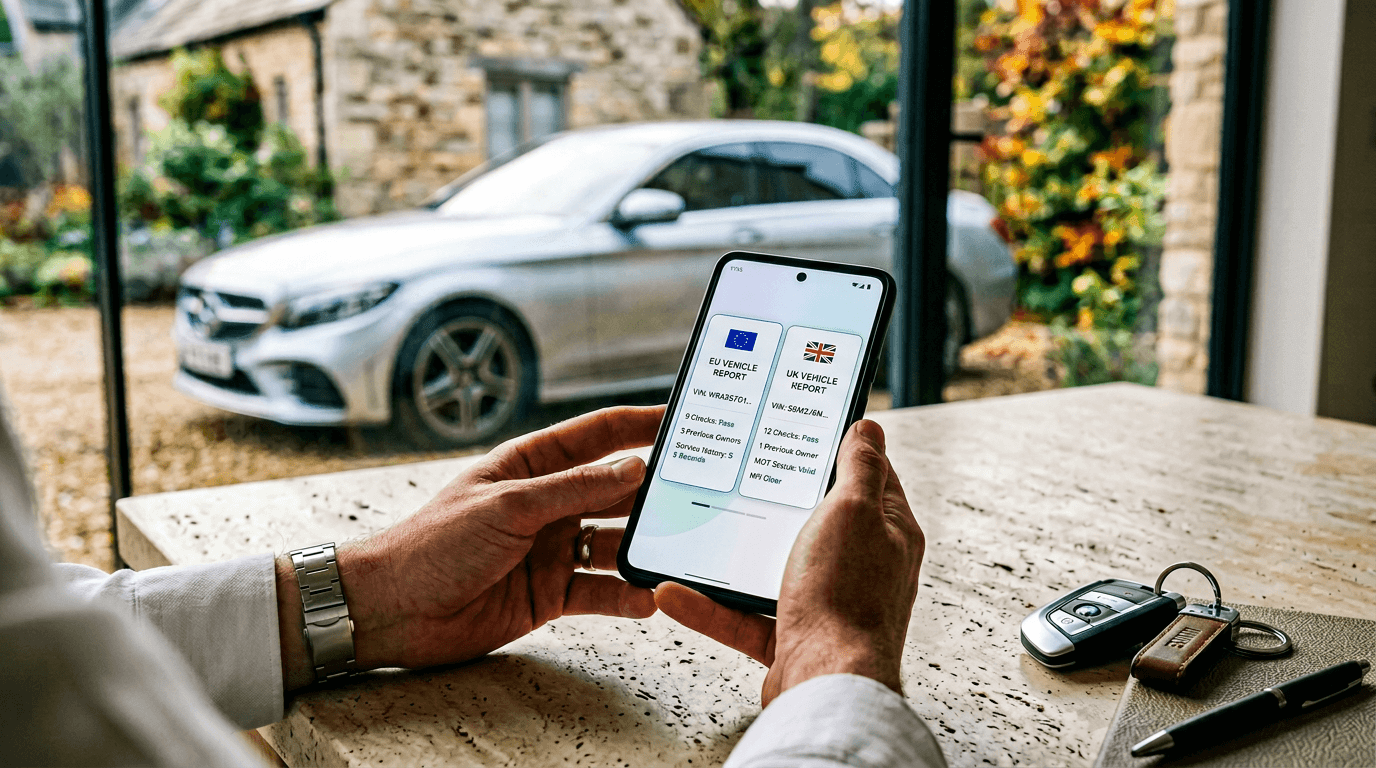
A car history check shows outstanding hire purchase, PCP and conditional sale agreements recorded against the vehicle, along with write-off markers, stolen markers, mileage at every MOT and keeper history. It does not show unsecured personal loans, because those are not attached to the car, and it cannot tell you whether the seller intends to be honest. Run it as part of a full used car check.
Key takeaways
- With HP, PCP and conditional sale the lender owns the car until the agreement is settled, so the seller cannot pass you clean title.
- Part III of the Hire Purchase Act 1964 can protect a private buyer who bought in good faith without notice, but showing that good faith falls to you.
- Buying from a trader gives you contractual routes back. Buying privately usually leaves you chasing an individual through the courts.
- Pay the settlement figure directly to the lender, get written confirmation, then pay the seller the balance.
- Check the registration before you travel and again before you pay, because an agreement can be taken out at any time.