Vehicle tax does not transfer when a car is sold. It is cancelled the moment DVLA is told the car has changed hands, so the car you have just bought is untaxed from that point and you have to tax it in your own name before you drive it away.
Quick answer
- Tax is cancelled on sale. The buyer inherits nothing.
- The seller gets an automatic refund for every full month left to run.
- The buyer taxes the car on the spot using the 12 digit reference on the green V5C/2 new keeper slip.
- Insurance must already be live before the car moves, and the car needs a valid MOT if it is old enough to need one.
- The seller's direct debit is cancelled automatically and does not carry over to you.
The rule that changed in October 2014
Before 1 October 2014 the tax disc sat in the windscreen and any remaining months went with the car. That ended when the disc was scrapped. Tax is now a database entry checked by cameras and by DVLA's own sweeps of the record, so there is no paper to hand over and nothing to pass on.
Two things happen automatically once DVLA processes the sale. The seller's tax is cancelled and refunded, and the vehicle shows as untaxed until a new keeper pays. There is no grace period and no tolerance while the paperwork catches up. The gap starts on the day of sale.
Check the tax and MOT position before you hand over money
Run the registration before you even travel to view the car. You want to know it is taxed or properly declared off road, that the MOT is genuinely in date, and that the make, model and colour DVLA holds match the advert. A tax check shows what is recorded against that plate right now, and a MOT check shows the test history sitting behind it.
A car showing as untaxed with no SORN on record is worth a question. Usually it just means a car that has been parked up. Occasionally it means the seller has already told DVLA the car was sold to somebody else, which is a conversation to have before any cash moves.
How to tax a car on the day you buy it
The seller keeps the main V5C and gives you the green V5C/2 new keeper slip. That slip carries a 12 digit reference, and it is the only thing you need to put the tax in your name.
- Go to gov.uk/vehicle-tax and enter the 12 digit number from the green slip.
- Pay by debit or credit card. Tax always starts on the first day of the current month, so you pay for the whole of the month you are in.
- Keep the confirmation. The record updates within minutes, and that record is what a camera reads.
DVLA also runs an automated telephone service around the clock, and a Post Office branch that handles vehicle tax can do it over the counter. If you are taxing with the green slip you may not be offered the direct debit option at that point, so pay by card and set a direct debit up later once the V5C arrives with your name on it.
No green slip means no tax on the day
If the seller cannot produce the V5C or the green slip, you cannot tax the car when you collect it. You would have to apply for a replacement logbook and wait for it to arrive, with the car staying off the road until it lands. Missing paperwork is also one of the oldest signs of a car that is not the seller's to sell, so treat it as a reason to pause rather than a detail to sort out afterwards. Our guide to
what the V5C should show covers the checks that matter.
Insurance and MOT come first
Tax is one of three things you need before the wheels turn. The car has to be insured in your name from the moment you take it over, and it needs a valid MOT if it is more than three years old. DVLA checks the MOT record when you tax, so a car with an expired test cannot be taxed at all until it has passed one.
Insurance is the part no history check can answer. The Carpeep report does not show whether a car is insured, and neither does the DVLA tax record. Once your cover starts, confirm the car is showing on the Motor Insurance Database using the free askMID own vehicle enquiry.
There is one narrow exception to driving an untaxed car. You may drive it to an MOT test that is genuinely pre-booked. You still need insurance, and the trip has to be to the test and nowhere else.
What happens if you drive it untaxed
- An automatic penalty: DVLA issues one straight from the record, without anybody stopping you at the roadside.
- Court action: prosecution can bring a fine of up to £1,000, plus the tax you owed.
- Clamping or removal: DVLA enforcement can clamp the car or take it away, and there is a release fee and a surety to pay before you see it again.
- No allowance for the drive home: the date on the green slip is on the record, and it does not excuse an untaxed journey back from the seller's house.
Refunds and the direct debit trap
If you are selling, tell DVLA the day the car goes. The refund covers full remaining months only, so a sale on the 2nd throws away the rest of that month. The cheque goes to the name and address held on the vehicle record, which is why an old address is the usual reason a refund never turns up.
The same notification cancels any direct debit automatically. That matters in both directions. If the sale never reaches DVLA, because a posted V5C goes missing for example, the direct debit keeps taking money for a car you no longer own and you stay the registered keeper for every fine that follows. And if you are buying, a seller who says the tax runs to March on a direct debit is describing something you will never receive.
| On sale day | Seller | Buyer |
|---|
| Vehicle tax | Cancelled, refunded in whole months | Must tax before driving, backdated to the 1st |
| Direct debit | Cancelled automatically | Cannot inherit it, sets up a new one later |
| V5C | Notifies DVLA, keeps nothing | Keeps the green V5C/2 slip |
| SORN | Ends on sale | Must make a fresh SORN if the car stays off road |
| Insurance | Cancels after handover | Live before the car moves |
What the record shows, and what it does not
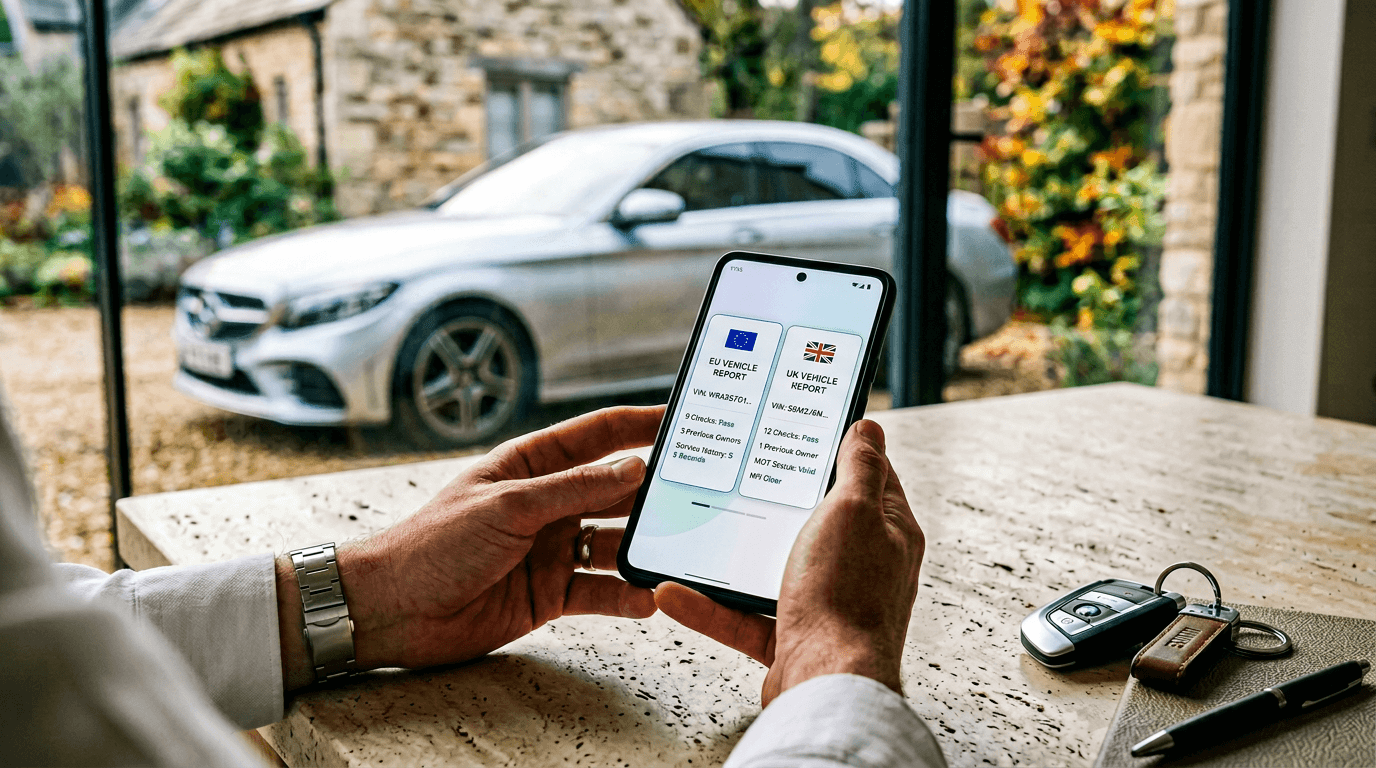
Tax status sits in the £15 Carpeep report next to outstanding finance, write off markers, stolen markers, the mileage recorded at every MOT and the keeper history. A full car history check is the fastest way to see all of that against one registration before you commit.
What it will not tell you is whether the car is insured, whether it has an outstanding manufacturer safety recall, or whether it meets the rules for a clean air zone. Recalls are free to check at gov.uk, and it takes about a minute.
Key takeaways
- Since October 2014 vehicle tax has been cancelled on sale, never transferred.
- Tax the car in your own name with the green V5C/2 reference before you drive it home.
- Tax is backdated to the 1st of the current month, so buying late in the month costs you a full month.
- Insurance and a valid MOT have to be in place as well, and only a pre-booked MOT test justifies driving untaxed.
- Sellers should notify DVLA immediately. The refund is in whole months and the direct debit stops on its own.