There is no fixed percentage, and anyone quoting one is guessing. A Cat S or Cat N marker does not subtract a set share of a car's value. It shrinks the number of buyers willing to consider the car, and the price falls until someone inside that smaller group agrees to it.
Quick answer
Three things set the size of the discount: how many buyers walk away when they see the marker, how much friction lenders and insurers add, and how easy the car would be to sell if it were unmarked. That is why the same category costs a nearly new premium saloon far more than it costs a twelve year old hatchback. Run a write-off check before you agree a price, because the marker is the single biggest fact about what the car is worth.
Why the discount exists at all
The buyer pool shrinks
Plenty of buyers will not consider a recorded write-off at any price. Some have a personal rule about it. Some are buying for a family member. Some simply do not want the conversation when they come to sell it on. Every one of those buyers leaves the market for that car. Fewer bidders means a lower clearing price, and it also means a longer wait for a sale, which pushes traders to price hard or move the car to auction instead of the forecourt.
Lenders and insurers price it in
Finance is where a lot of retail deals die. Some lenders decline to fund a vehicle with a write-off marker, and others will only lend at a reduced loan to value. That removes the buyers who were paying monthly rather than in cash, and that is a large slice of the used market. Insurance adds a second layer. Some insurers will not quote on a recorded write-off at all, so the buyer has to shop around and may pay more for cover.
The marker is permanent, so you inherit it
This is the part people underestimate. A salvage category stays on the vehicle record for the rest of the car's life. Legacy Cat C and Cat D entries from before October 2017 are still visible today. When you sell, your buyer runs their own check, finds the same entry, and applies the same discount you negotiated. You do not get that money back at the other end.
"The discount is not a one off hit. It is a permanent feature of the car, and it belongs to whoever owns it next."
Why newer and more desirable cars lose more
The size of the discount tracks how much choice the buyer has. If there are forty clean examples of the same model within an hour's drive, a marked one has to be cheap to get looked at. If the car is old, rare or already inexpensive, the marker matters far less, because the buyer's alternatives are also imperfect.
| Factor | Bigger discount | Smaller discount |
|---|
| Age and value | Nearly new, high value | Older, low value |
| Supply of clean examples | Common model, many rivals for sale | Rare model or hard to find spec |
| How buyers pay | Mostly bought on finance | Mostly cash purchases |
| Typical buyer | Family and first car buyers | Enthusiasts, trade, project buyers |
| Repair evidence | No invoices, no photographs | Full repair file and inspection report |
A ten year old car worth a modest sum can carry a Cat N marker with a fairly small effect, because the buyer is already accepting age, wear and a patchy history. A three year old car still inside its manufacturer warranty is judged against clean stock, so the gap is far wider.
Cat S and Cat N are not treated the same
Cat N means the damage was not structural and the repair was uneconomic against the value of the car. Cat S means the structure was damaged, and the vehicle had to be re-registered with the DVLA before it could return to the road.
Buyers react to that difference, so a Cat N car usually holds more of its value than a Cat S car of the same age and model. Do not read too much into the label on its own, though. Cat N covers a huge range of severity, and it includes cars with damaged suspension, steering or electrical systems. The category tells you the type of damage, not the quality of the repair. There is more on both on our Cat S and Cat N pages.
If you already own one
You cannot remove the marker. It records a settled insurance claim and it is not going anywhere. What you can do is shrink the discount by removing the buyer's uncertainty, because most of the fear is about the repair rather than the paperwork.
- Gather every invoice, parts receipt and photograph from the repair, including images taken before the work started.
- Get an independent inspection or engineer's report, and keep a four wheel alignment printout if the repair touched the structure or suspension.
- Keep the MOT record clean and deal with advisories before they turn into a pattern. Any buyer can read that history on GOV.UK.
- State the category in the advert. Buyers who discover it halfway through the deal either walk away or renegotiate hard.
- Expect a private sale to beat a part exchange. Dealers often send marked cars straight to auction rather than retail them.
When buying a repaired write-off makes sense
A recorded write-off is not automatically a bad buy. It is a bad buy at a clean car price. Judge it on whether the discount is real and the repair is evidenced.
Worth considering
- The discount is genuine against clean cars of the same age and mileage
- The damage is documented and the repair has invoices behind it
- An independent inspection has been done, or you can arrange one before paying
- You plan to keep the car for years rather than sell it on quickly
- Your insurer has confirmed cover and the premium before you commit
Walk away
- The price sits at or near clean market money
- The seller never mentioned the category and only admits it when challenged
- No repair paperwork exists and nobody can say who did the work
- Uneven panel gaps, paint mismatch, overspray or fresh underseal in one area
- The category is Cat A or Cat B, which must never be on the road
Check the marker before you agree a price
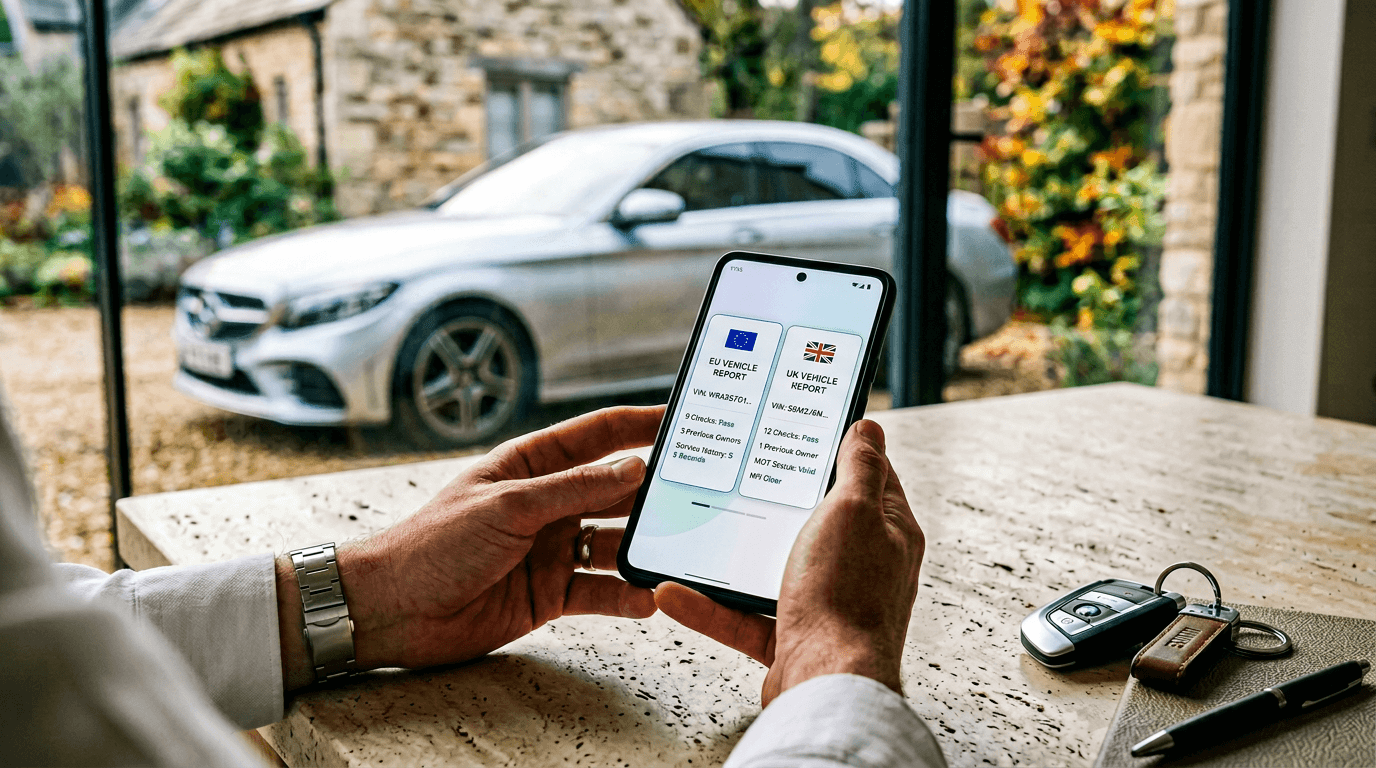
The order matters. Once you have shaken hands on a number, finding a marker turns into an argument you are unlikely to win, and plenty of sellers will simply move on to the next buyer. Run the registration first, then negotiate with the category in front of you. A write-off check returns the category and the recorded loss date, and a full used car check puts that alongside the finance, mileage, stolen and keeper records for £15. If you want the collision picture as well as the marker, our accident history check explains what is recorded and, just as usefully, what is not.
Key takeaways
- There is no standard percentage. The discount is whatever a smaller pool of buyers will pay.
- Finance and insurance friction removes buyers, and that is a large part of why the price falls.
- The marker is permanent, so the discount follows the car and lands on you when you sell.
- Newer, common, finance heavy cars lose the most. Older, cheaper cars lose the least.
- Evidence closes the gap. Invoices, photographs and an independent inspection are worth real money at resale.
- Check the record before you agree a price, not after.