Transferring car ownership in the UK is two separate jobs, one for each side. The seller tells the DVLA the car has been sold, and the buyer keeps the green V5C/2 new keeper slip and taxes the car before driving it away. Done properly on the day of the sale, both take minutes and cost nothing.
Quick answer
| Who | What they do | When |
|---|
| Seller | Tells the DVLA the car is sold, online using the 11 digit number on the V5C | Day of sale |
| Seller | Hands over the green V5C/2 new keeper slip and keeps the rest of the V5C to destroy | At handover |
| Seller | Saves the DVLA confirmation email or screenshot as proof | Day of sale |
| Buyer | Taxes the car using the 12 digit number on the green slip | Before driving away |
| Buyer | Watches for the new V5C to arrive in their name | Within a few weeks |
| DVLA | Cancels the seller's tax and any direct debit, and refunds full remaining months | Automatic |
What to settle before money changes hands
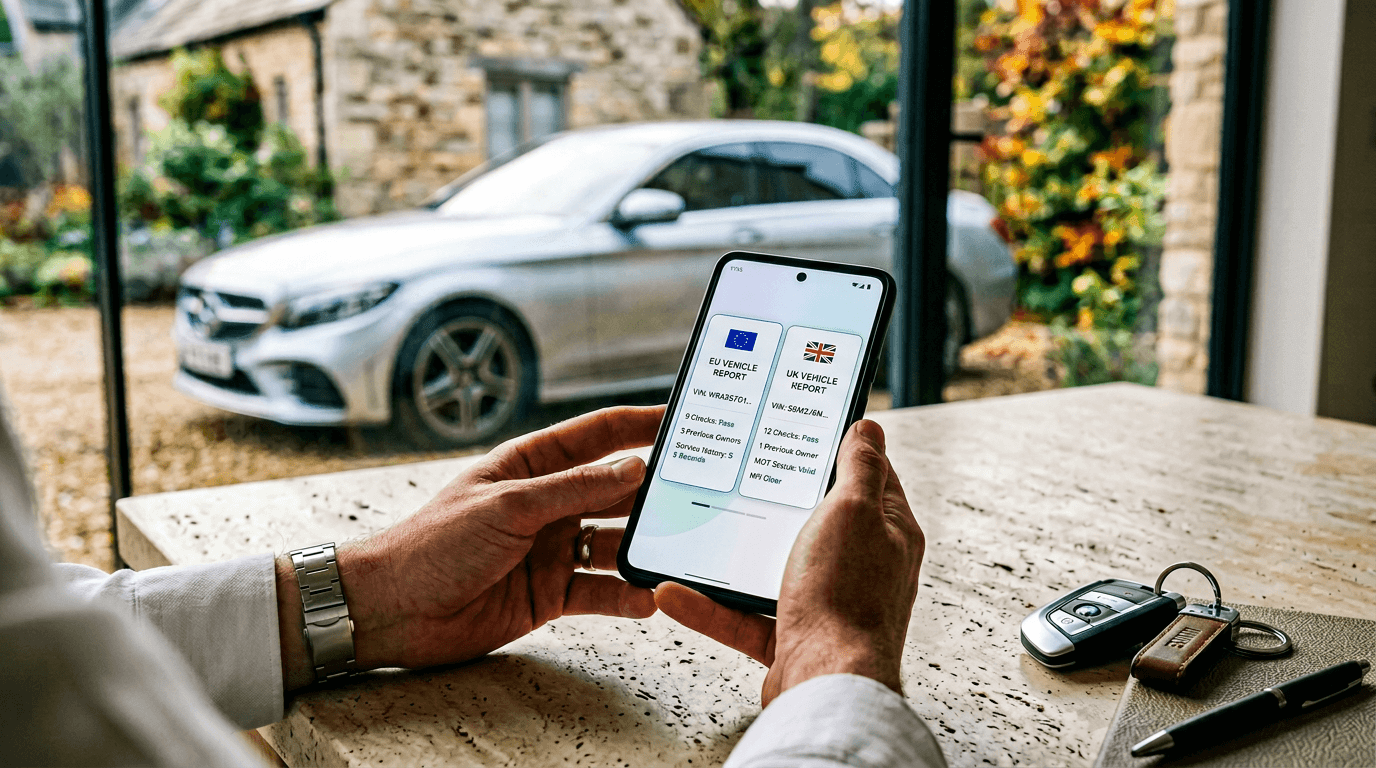
The transfer is the easy part. The checks that protect you happen before it. Make sure the person selling is the registered keeper named on the V5C, that their address matches where you are standing, and that the VIN stamped on the car matches the one on the document. A V5C logbook check confirms the DVLA record behind the document, and a car owner check shows how many keepers the car has had and when each change happened, which is the quickest way to spot a seller who has owned it for three weeks rather than three years.
If the car is still on finance, none of the paperwork below helps you. The lender keeps its claim on the vehicle whatever the V5C says.
The parts of a V5C you will actually use
The main V5C. The full multi-page certificate. The seller keeps it long enough to complete the sale, then destroys it once the DVLA has been told. It carries an 11 digit document reference number used to notify the sale.
The V5C/2 green new keeper slip. The section the buyer takes away. It carries a 12 digit reference number, and that number is what lets the buyer tax the car straight away. Without it, taxing on the day is a great deal harder.
The trade section. A separate part for selling to a motor trader, dealer or dismantler. Use it only for that. Ticking it on a private sale records the wrong kind of transfer.
Step 1: the seller tells the DVLA
Do this online at the GOV.UK sold or bought a vehicle service. The seller needs the 11 digit reference number from the V5C and the buyer's name and address. Confirmation is immediate, the tax is cancelled the same day, and the DVLA follows up with a letter confirming the seller is no longer the keeper.
The postal alternative is to complete the new keeper section of the V5C, tear off the green slip for the buyer, and post the rest to the DVLA. It works, but it is slow and it leaves the seller carrying the liability until the form is processed. If a private plate is staying with the seller, sort the retention before the sale, not after.
Step 2: the buyer keeps the green slip
The green V5C/2 slip is the buyer's only proof of the transfer until the new V5C arrives. Check that the seller has filled in your correct name and address on it before you drive off, because whatever they wrote is what the DVLA will process. Photograph the completed slip and the front page of the V5C on your phone at handover.
The new logbook should reach you within a few weeks. If nothing has arrived after about four weeks, contact the DVLA rather than waiting, because a missing V5C usually means the seller never notified the sale or entered your details wrongly.
Step 3: tax it before you drive it
Road tax does not transfer with the car. The moment the sale is registered, the seller's tax is cancelled and the vehicle is untaxed, even if there were ten months left on it. Tax it online or by phone using the 12 digit number on the green slip, before you move the car. Automatic number plate recognition does not care that you bought it an hour ago, and an untaxed car attracts a late licensing penalty and can be clamped.
You can confirm the position afterwards with a car tax check, and if you are budgeting for the year ahead, the rate depends on when the car was first registered and its emissions. Our guide to car tax bands covers how the 1 April 2017 change split older and newer cars into different systems.
The seller's refund is automatic
The DVLA refunds full remaining months of tax to the name and address on the V5C, and cancels any direct debit, without the seller applying. There is nothing to claim. If a refund has not appeared within a few weeks, that is a sign the sale was never registered.
What goes wrong, and what it costs
The seller never notifies. This is the most expensive mistake on the list. Until the DVLA is told, the seller remains the registered keeper, which means their name is attached to the tax liability, to any speeding or parking penalties the new driver collects, and to the car if it is abandoned or dumped. Failing to tell the DVLA you have sold a vehicle can bring a fine of up to £1,000. The fix is to notify late and keep the evidence.
The buyer never gets a V5C. Usually the sale was not registered, or the address was entered incorrectly. Chase it at four weeks. If the seller has gone quiet, the buyer can apply to the DVLA for a logbook themselves, but expect it to take longer and expect the DVLA to write to the previous keeper first.
The buyer drives away on the seller's tax. A costly assumption, and a common one on cars bought at the weekend with the intention of taxing on Monday.
Nobody keeps proof. If a dispute follows, the party with a confirmation email, a photograph of the completed slip and a signed receipt wins it. Write a receipt with both names and addresses, the registration, the VIN, the mileage, the price and the date, and both sign it.
Trade sales, scrapping and export
Selling to a dealer uses the trade section of the V5C, and the trader should give you a receipt. Do not simply hand the whole logbook over and walk away without notifying, because dealers do not usually register themselves as the keeper, and the DVLA record can sit in your name for months. Scrapping is different again: an authorised treatment facility issues a certificate of destruction, and the record is then closed permanently. If you are buying, a scrapped car check will show whether a vehicle already carries a destruction marker, which no amount of paperwork can undo.
Key takeaways
- The seller notifies the DVLA online with the 11 digit V5C number, the same day the car leaves.
- The buyer keeps the green V5C/2 slip and uses its 12 digit number to tax the car before driving it.
- Road tax never transfers. The seller is refunded automatically for full remaining months.
- A seller who fails to notify stays liable for the car and can be fined up to £1,000.
- If the new V5C has not arrived within about four weeks, contact the DVLA instead of waiting.