Clocking a car is not itself a specific criminal offence in the UK. Winding an odometer back is not, on its own, the thing the law punishes. Selling the car afterwards without telling the buyer that the reading is not genuine is where the offence arises, most directly under the Consumer Protection from Unfair Trading Regulations 2008, and potentially as fraud.
Quick answer
Altering a mileage reading is legal in the narrow sense that no statute makes the act itself a crime. That is why "mileage correction" firms advertise openly and take payment by card. The moment the vehicle is offered for sale on a reading the seller knows is false, and the buyer is not told, the seller is misleading a consumer about a material characteristic of the goods, and that is an offence. A buyer's real protection is not the criminal law. It is checking the recorded readings before money changes hands with a mileage check.
What follows is general information about how the rules work, not legal advice. If you have lost money on a clocked car, take advice on your own facts.
Where the law actually bites
It helps to separate the two acts that people run together. One is changing a number. The other is taking money from someone who believes that number.
Not an offence in itself
- Adjusting the mileage displayed on your own vehicle.
- A garage setting a replacement instrument cluster to the correct figure after a fault.
- Converting a reading from kilometres to miles on an imported car.
- Advertising and providing a mileage adjustment service.
Where the offence starts
- Selling or advertising a vehicle on a mileage the seller knows is false.
- Staying silent about an adjustment the buyer would obviously want to know about.
- Removing a disclosure sticker or destroying the paperwork that recorded a correction.
- Making a false statement about mileage to obtain money, which can be charged as fraud.
The 2008 regulations catch both the false statement and the deliberate omission. A trader who leaves out information a consumer needs to make an informed decision is treated as having misled them, so "they never asked" is not a defence.
Why mileage correction can advertise openly
Because the service has legitimate uses. Instrument clusters fail and get replaced with used units carrying the donor car's figure. Rebuilt dashboards come back showing zero. Some vehicles record in kilometres and need converting after an import, which an import check will confirm. In each case the right outcome is a display that matches the car, plus documentation, plus a note or sticker recording what was changed and when.
The trade sits on that legitimate ground. Responsible operators keep records, refuse jobs that look wrong and insist on documenting the change. Others ask no questions at all. The law reaches the seller who exploits the result rather than the tool that produced it.
"The offence is not in the laptop. It is in the sale."
Who is liable when a clocked car is sold
Traders
A dealer or anyone selling in the course of a business is on the clearest ground. The 2008 regulations apply to them directly, and so does the Consumer Rights Act 2015, which requires goods to match their description. A car sold as a 45,000 mile example that has covered far more is not as described, and mileage is not a minor detail. It drives the price.
Traders also cannot lean on ignorance easily. If the recorded readings would have shown a discrepancy to anyone who looked, saying nobody looked is a weak answer, because checking is a routine part of the trade.
Private sellers
The consumer protection regulations are aimed at traders, so a genuine private seller usually sits outside them. That does not make a private seller untouchable. A false statement about mileage that persuades someone to buy can be a misrepresentation, which is a civil matter between the two of you, and a deliberate lie told to obtain money can still be fraud. The practical problem is that pursuing a private individual costs time and money, and the seller is often already unreachable.
"Sold as seen" does not cover a lie
That phrase is about the condition you could have inspected, not about false statements. A seller who states a mileage they know to be untrue is not protected by three words on a receipt. It is still a reminder of how much weaker a private purchase is, which is exactly why the checking belongs before the handshake.
What enforcement looks like in practice
Criminal enforcement of the 2008 regulations is carried out by Trading Standards rather than the police, and it is aimed at businesses. Cases usually build from repeated complaints about the same dealer, and the ones that reach court tend to involve a pattern rather than a single car. For the most serious cases dealt with in the Crown Court, the regulations set a maximum of two years in prison alongside a fine. Where conduct is charged as fraud instead, the maximum under the Fraud Act 2006 is far higher, up to ten years. Real sentences depend entirely on the scale and the circumstances.
For one buyer, the message is blunt. Reporting a clocked car is worth doing, and you should, but it is a route to enforcement against a business rather than a fast way to get your own money back. You can find your local team through GOV.UK.
What a buyer's remedies actually are
Against a trader, the Consumer Rights Act 2015 gives a 30 day short-term right to reject goods that are not as described, which means handing the car back for a refund. After that window the trader normally gets one chance to put things right, and if they cannot you can claim a price reduction or reject the car under the final right to reject. Mileage cannot be repaired, so a misdescribed car tends to sit in the rejection route rather than the repair one.
If you bought on finance, tell the lender as well as the dealer, because the agreement is part of the transaction and the lender has its own interest in the car. Where a deposit went on a credit card, the card provider may share liability with the seller. Against a private seller you are in civil claim territory, arguing misrepresentation, and carrying the burden of proving what you were told.
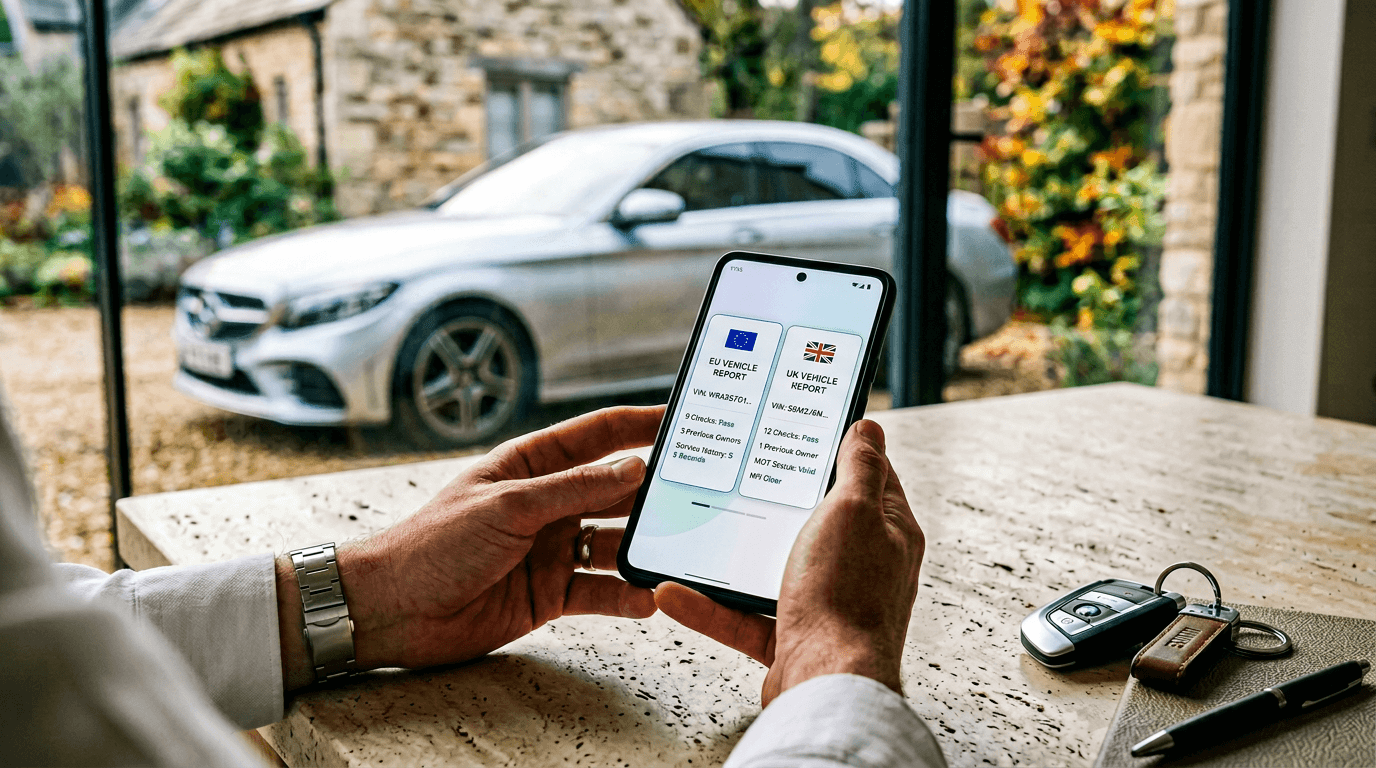
The strongest position is the one you take before paying. Every reading recorded at an MOT is on the record already, so the discrepancy a court would later argue about is visible now. A full history check shows those readings alongside finance, write-off and stolen markers, and the MOT record adds the advisories that show whether the car's condition matches its claimed life. Neither shows service history, so ask for the book and the invoices as well.
Why the loophole survives
Making odometer adjustment a criminal act in itself would catch the garage doing a legitimate cluster replacement, the specialist correcting a genuine error and the importer converting kilometres to miles. Successive governments have preferred to leave the tool alone and punish the deception instead. It is a defensible position, and it puts the burden of detection on buyers, which is why the MOT mileage record matters as much as it does.
Key takeaways
- Altering an odometer is not a specific criminal offence in the UK, which is why mileage correction services can operate openly.
- Selling a vehicle without disclosing that the reading is not genuine is an offence under the Consumer Protection from Unfair Trading Regulations 2008, and can also be charged as fraud.
- Traders are the clearest target. Private sellers are pursued through civil misrepresentation instead.
- Trading Standards enforce the regulations against businesses, so reporting helps future buyers more than it recovers your own money.
- Against a trader, the Consumer Rights Act 2015 gives a 30 day short-term right to reject a car that is not as described.
- Checking the recorded MOT readings before you pay is worth more than any remedy available afterwards.