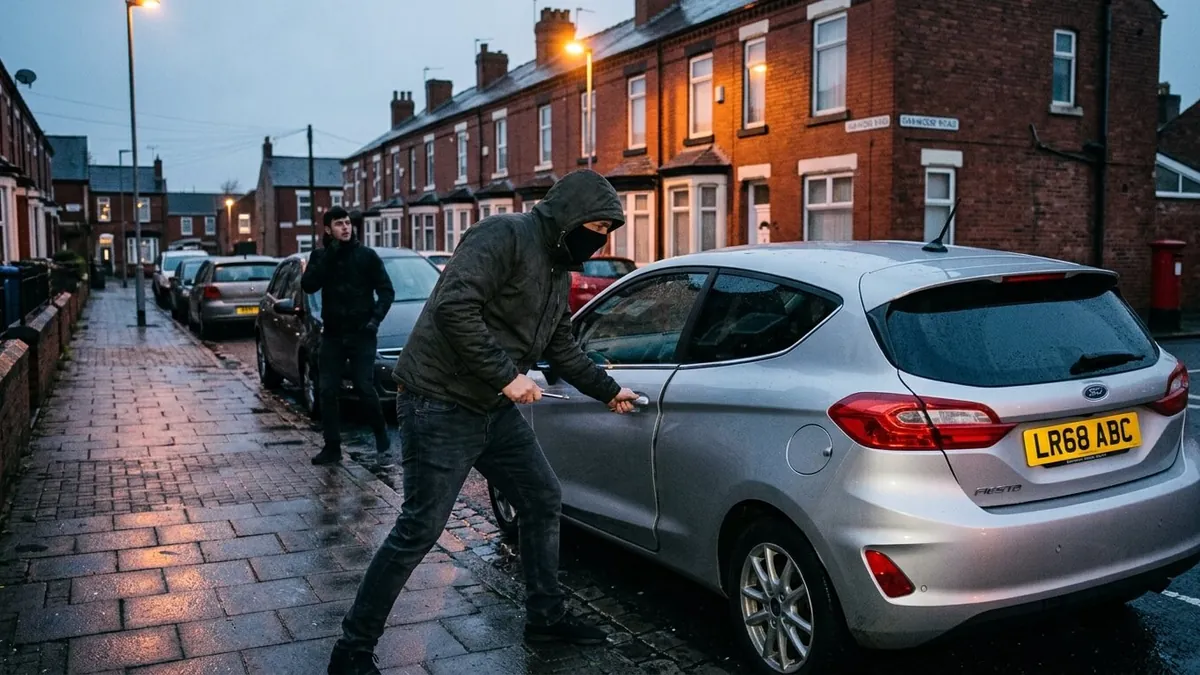
Before you buy a used car, especially from a private seller, it is worth taking a few minutes to check whether the vehicle carries a recorded stolen marker. A car can look completely genuine, come with a V5C logbook and a friendly seller, and still carry real risk if the registration, VIN, seller details or vehicle history do not line up.
Most sellers are honest. But theft and vehicle identity fraud do happen, and the buyer is usually the one left out of pocket. The good news is that you can run a stolen car check before you pay, and it only takes a minute.
This guide explains how to check if a car is stolen before buying, why the V5C is not proof of legal ownership, and the warning signs that should make you slow down.
Can you check if a car is stolen before buying?
Yes. You can check whether a vehicle has a recorded stolen marker before buying, and you should do it before paying a deposit or transferring any money.
A stolen car check looks up the registration against police and industry theft records and tells you whether the car has been reported and recorded stolen. It is one of the simplest checks you can do, and it is far easier to do before you pay than to sort out afterwards.
It is especially important when:
- You are buying privately rather than from a dealer.
- The car is priced noticeably below similar vehicles.
- The seller is rushing you or pushing for a quick sale.
- The seller will not meet you at the address on the V5C.
If any of those apply, a quick stolen car check is well worth doing. Private sales carry more risk than a forecourt purchase, so a private seller stolen car check should be part of your routine, not an afterthought.
How to check if a car is stolen before buying
You do not need to be an expert. Work through these steps in order and stop the moment something does not add up.
- Ask for the registration number before viewing. A genuine seller will share it happily. It lets you check the car from home and even run a stolen car check by reg before you travel.
- Check that the reg matches the vehicle details. Make sure the make, model, colour and year on record line up with the car in the advert.
- Match the VIN on the car to the V5C logbook. Find the Vehicle Identification Number on the car and confirm it matches the V5C exactly.
- Check the seller's name and address. The seller should be the registered keeper shown on the V5C, at the address shown.
- Be cautious if the seller will not meet at the registered address. Insisting on a car park or a neutral location is a common warning sign.
- Run a stolen car check before paying. A stolen car check confirms whether the vehicle has a recorded stolen marker. Do this before any money changes hands.
- Walk away if anything does not match. There are always other cars. No deal is worth losing both the car and your money.
Does the V5C prove the car is not stolen?
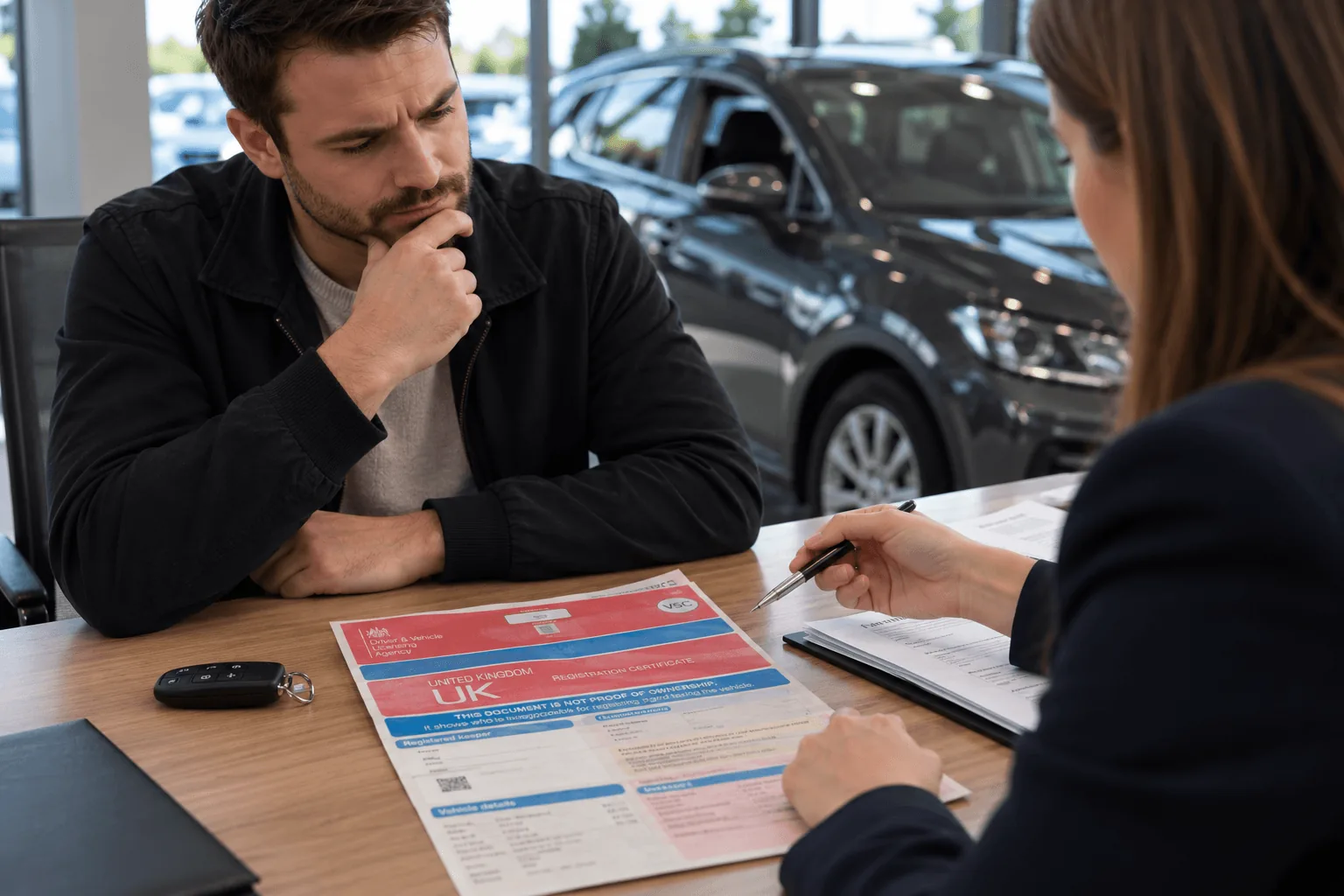
No. The V5C shows the registered keeper. It is not proof of legal ownership, and it is not proof that a car is free of risk.
This is one of the most common misunderstandings among used car buyers. The registered keeper is the person responsible for the car day to day, such as taxing it and receiving fines. That is not the same as the legal owner. So the V5C does not, on its own, prove the seller owns the car or has the right to sell it.
A V5C logbook is still important, and you should always see it. But treat it as one piece of the picture rather than a guarantee. If you want to understand the ownership history, it is worth checking how many previous keepers the car has had and how long the current keeper has held it, which helps you judge whether the seller's story makes sense.
Can a stolen car have a logbook?
Yes. A seller may show a genuine-looking V5C, an old V5C, a fake or altered document, or a logbook where the details do not properly match the car in front of you.
In some cases a stolen car is given the identity of a legitimate vehicle, which is known as cloning. The paperwork can look convincing because the details belong to a real car that still exists elsewhere. That is why the document alone is never enough.
Before you trust a logbook, check that everything agrees with the car:
- The VIN on the car matches the VIN on the V5C.
- The registration number matches the plates and the documents.
- The seller's name and address match the V5C.
- The V5C address is somewhere the seller is willing to meet.
- The vehicle history is consistent and free of obvious gaps.
If the details do not line up, treat it as a serious warning sign and do not go ahead until everything checks out.
Warning signs a car might be stolen
No single sign proves a car is stolen, but several together should make you stop and check properly.
- The seller refuses to meet at the V5C address.
- The price is far below similar cars.
- The seller rushes the sale.
- The V5C details do not match the car.
- The VIN looks tampered with or does not match.
- The seller avoids giving the reg or VIN.
- The number plates look recently fitted or suspicious.
- The seller wants payment before viewing.
- The advert disappears or changes quickly.
- The seller claims the V5C is missing or "in the post".
Many of these overlap with the wider red flags when buying a used car. If you spot a cluster of them, slow the process down and verify before you commit.
What happens if you buy a stolen car?
If you unknowingly buy a stolen car, it can be seized and returned to its legal owner or their insurer, and you may lose the vehicle even though you paid for it in good faith.
Recovering your money from the seller can be difficult, especially if they used fake details or disappeared after the sale. This is not meant to scare you, but it is the honest reason a quick check beforehand is so valuable.
Check first, not last
This is why you should check the car before paying, not after. A stolen car check takes a minute and is far cheaper than the cost of losing a car you have already paid for.
Stolen car check vs full car history check
A stolen marker is only one risk. A car can be completely clear for theft and still have problems that cost you money later.
A vehicle that is clear of a recorded stolen marker may still have:
- Outstanding finance: money still owed on the car, which can pass to you along with the vehicle.
- Accident / write-off history: previous insurance write-off categories that affect safety and value.
- Mileage problems: readings that drop or jump in a way that suggests clocking.
- MOT issues: a history of failures or advisories worth knowing about.
- Unusual keeper history: a high number of keepers in a short time.
For full peace of mind, a car history check brings the stolen marker, finance, accident / write-off history, mileage and MOT records together in one place, so you are not relying on the seller's word for any of it.
Final checklist before paying
Run through this short checklist before you hand over any money.
- Check the registration number.
- Check the VIN on the car.
- Check the V5C logbook.
- Check the seller's details against the V5C.
- View the car at the registered address where possible.
- Avoid rushed or pressured payment.
- Run a stolen car check.
- Walk away if anything does not line up.
None of this guarantees a perfect car, and a vehicle history check cannot prove a seller is honest. What it does is give you the facts that are on record, so you can make a calmer, better-informed decision.
Before you pay
Before you pay for a used car, run a Carpeep
stolen car check by reg. It is a quick step that helps you avoid buying a car with a recorded stolen marker.