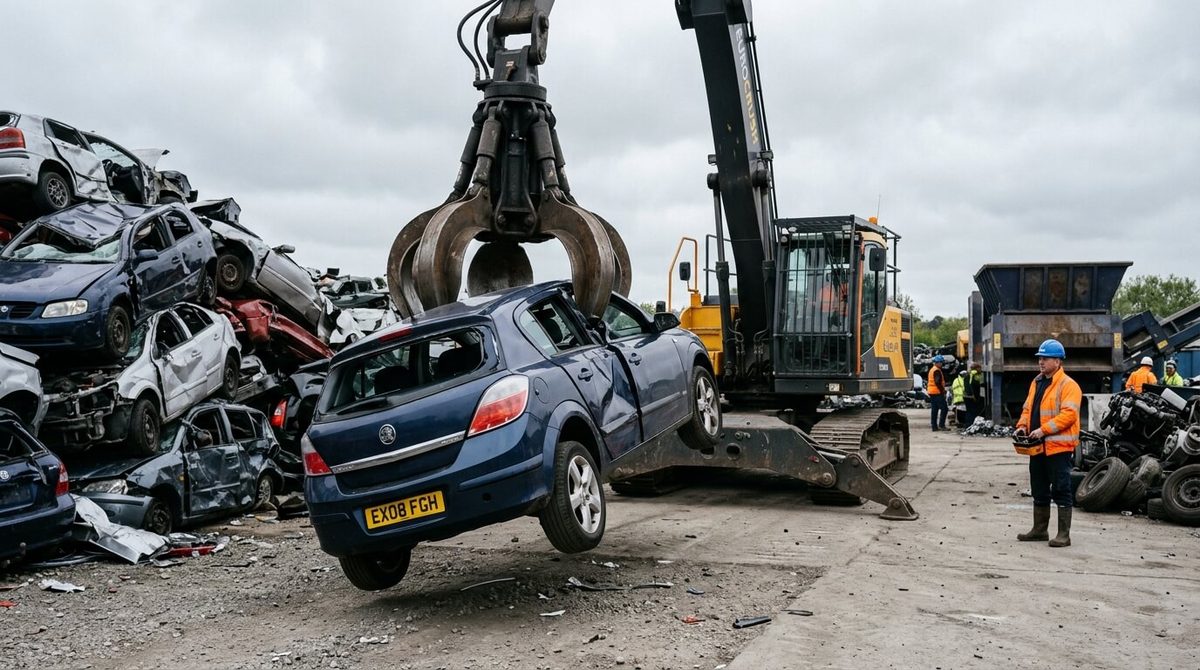
A Q registration is issued when DVLA cannot establish a vehicle's true identity or the year it was built. The plate reads Q, then up to three numbers, then three letters, and unlike every other British format it carries no age identifier, because the age is the very thing that could not be proven.
Quick answer
A Q plate is a statement about paperwork rather than about roadworthiness. It usually means the vehicle was built, rebuilt or imported in a way that left DVLA unable to tie it to a known original. In practice it is permanent, it rules out ever fitting a personalised registration, and it narrows the pool of insurers and future buyers. It is not evidence of anything dishonest on its own, but the identity chain is broken in the record, so you have to work out what the vehicle is from documents and inspection instead of from its registration.
Why a vehicle ends up on a Q plate
Q registrations were introduced in 1983 for vehicles of indeterminate age, and a small number of situations account for almost all of them.
- Kit cars and self builds. A car assembled from a kit using a mixture of new and second hand parts, where nothing carries a provable original identity.
- Radically altered vehicles. A car rebuilt to the point where too little of the original remains, judged by the DVLA points system below.
- Rebuilds from salvage. A vehicle put back together from a written off donor or from parts of several vehicles, where the identity of the finished car cannot be proven.
- Imports without adequate documentation. A vehicle that arrives with no reliable paperwork to establish its date of manufacture and no dating evidence from a recognised source.
- Damaged or missing identity marks. A vehicle whose chassis number or VIN has been removed, corroded away, altered or duplicated, and cannot be re-established.
The points system behind the decision
How DVLA scores a rebuilt vehicle
DVLA awards points for original components. A radically altered vehicle keeps its original registration only if it reaches eight points, and the five points for an original or correctly specified replacement chassis or bodyshell have to be part of that total. Miss it and the vehicle goes onto a Q plate.
| Component | Points |
|---|
| Original or new replacement chassis, frame or unmodified bodyshell | 5 |
| Suspension, front and back, original | 2 |
| Axles, both, original | 2 |
| Transmission, original | 2 |
| Steering assembly, original | 2 |
| Engine, original | 1 |
Reconstructed classics are treated separately. Where every part comes from vehicles of the same make and type and is over twenty five years old, DVLA can issue an age related mark instead of a Q. The detail sits in the vehicle registration guidance on gov.uk.
What a Q plate means in practice
- Insurance is narrower: plenty of mainstream insurers will not quote at all, and cover usually comes from specialist kit car or modified vehicle schemes on an agreed value.
- Value takes a hit: the buyer pool is smaller and pricing is harder, because there is no clean comparison with the same model on an ordinary mark.
- No private plate, ever: a personalised registration cannot be assigned to a Q vehicle, and a mark cannot be taken off one either.
- Historic status is out of reach: the forty year rolling exemption from vehicle tax depends on a known build date, which is exactly what a Q vehicle's record lacks.
- It follows the vehicle: the Q stays with the car through every future sale unless the identity is later proven to DVLA's satisfaction.
Check what the record holds
A Q vehicle still has a registration and a VIN, so the usual data attaches to it. MOT tests and the mileage recorded at each one, tax status, keeper changes, finance agreements, stolen markers and write off markers all sit against that plate. Start with a reg check to see what the databases hold, then cross reference it with a VIN check against the number stamped into the car itself. If the plate carries no age identifier, our guide to number plate years explains what you would otherwise have been able to read from it.
Is a Q plate a bad sign?
Not by itself. Plenty of Q vehicles are honest, well engineered builds, and the owners who put a vehicle through the DVLA process are rarely the ones cutting corners. The plate is DVLA being careful, not DVLA making an accusation.
The real catch is subtler than fraud, and it is the most important thing to understand before you buy. A check on a Q vehicle tells you about the Q vehicle. If the car was rebuilt from a written off donor, that donor's damage history sits under a different VIN and a different registration, and it will not appear under the Q mark. The Q plate is the point where the paper trail restarts. That is worth holding in mind when you read about insurance write off categories, and it is why a write off check on the current registration can come back clear on a vehicle that started life as salvage.
Ask for the build file
A well documented Q vehicle usually comes with a folder. Look for the Individual Vehicle Approval certificate where one applies, receipts for the major components, the donor vehicle's V5C or registration details, dated photographs of the build, and any engineer's report or club dating evidence. A seller who cannot produce any of it is asking you to take the identity of the car on trust, which is the one thing the Q plate says nobody else has been able to do.
Can you sell a Q plate car?
Yes. It changes hands on a V5C like any other vehicle and the process is identical. Expect a longer sale and a narrower audience. Price it against other Q registered examples rather than against standard cars, say so plainly in the advert, and hand the documentation over with it, because for this kind of vehicle the file is a real part of the value. Any experienced buyer already knows that a registration on its own cannot vouch for a vehicle's past.
Can the Q ever be removed?
Rarely, and only with evidence. If an owner can later prove the vehicle's identity and age to DVLA's satisfaction, using original registration documents, manufacturer records or a dating certificate from a recognised club, DVLA can reassign an age related mark. An inspection is likely to be part of that. Assume the Q is permanent when you work out what the vehicle is worth, and treat a successful reassignment as a bonus rather than a plan.
Key takeaways
- A Q registration means DVLA could not establish the vehicle's identity or age, not that it is unsafe.
- Kit cars, radical rebuilds, salvage rebuilds and poorly documented imports are the usual causes.
- A rebuilt vehicle keeps its original mark only by scoring eight points, including five for the chassis or bodyshell.
- Expect specialist insurance, a smaller resale market, no personalised plate and no historic tax exemption.
- History data attaches to the Q vehicle itself, so a donor car's past may sit under a different VIN entirely.